
Choosing a pillow is not only about fill and firmness. Size matters just as much. The right pillow size keeps your neck aligned, fills the width of your mattress properly, and helps your bed look put together instead of awkwardly bare or crowded.
Once you understand how pillow dimensions work, it becomes much easier to shop with confidence and mix sizes for that relaxing, hotel level setup at home.
How Pillow Sizes Are Measured?
Most bed pillows follow a simple rule. The width stays fairly consistent at around 20 inches, while the length changes depending on the size category.
A standard pillow is the shortest, and each larger size adds a few inches of length. That extra length influences how many pillows you need across the head of the bed and how much space you have to move during the night.
When you look at a label, you will usually see measurements listed in inches, written as width by length. For example, 20 x 26 inches.
Once you get familiar with these key dimensions, the names on the packaging stop feeling vague and start to mean something in real life.
Standard pillow size
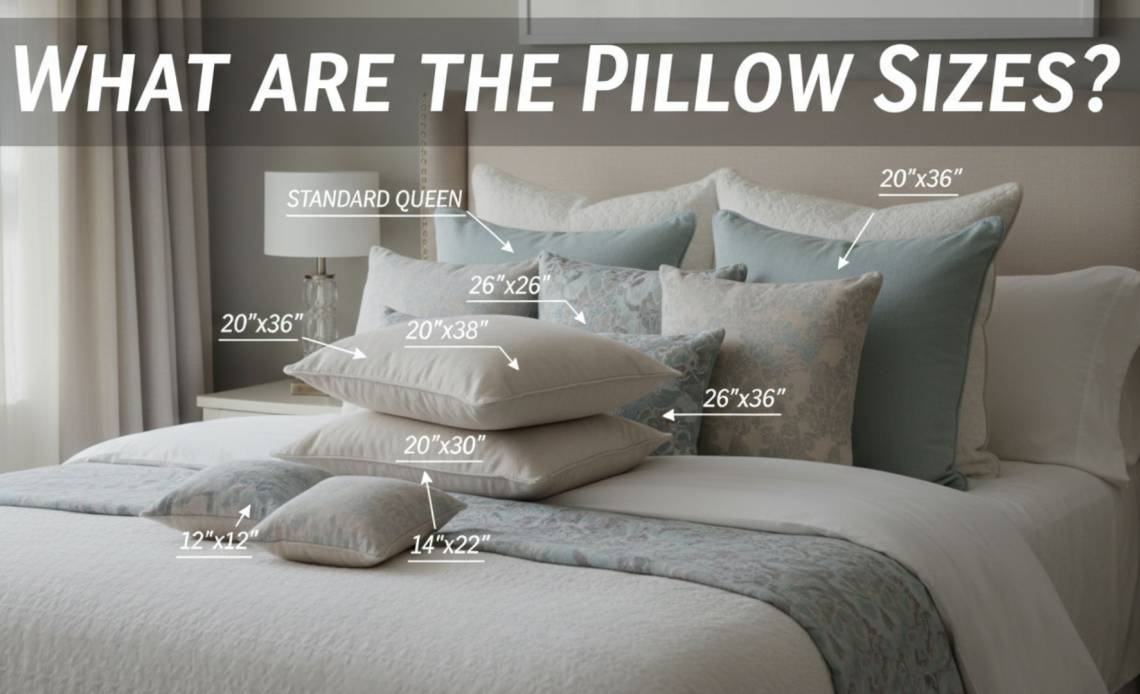
A standard pillow typically measures about 20 x 26 inches. It is the most common bed pillow size and usually the most affordable option on the shelf.
One standard pillow fits comfortably across a twin or twin XL mattress. On a full or queen bed, two standard pillows line up neatly side by side without leaving large gaps at the edges.
Because the pillow is relatively compact, it works well if you stay fairly still at night or sleep in a tighter space, such as a small bedroom or guest room.
Standard pillows are a good all round choice for kids, teens, and adults who want simple, no fuss bedding that fits easily into widely available pillowcases.
Almost every bedding brand makes standard cases, so you never struggle to find covers that fit.
Read More: What Are The Rug Sizes?
Super standard or jumbo pillows
Between standard and queen size, some brands offer a slightly longer option often called super standard or jumbo. These pillows usually measure around 20 x 28 inches, just two inches longer than a standard.
Super standard pillows are useful if you tend to drift toward the edge of your pillow during the night but are not ready to jump up to a full queen length.
They still fit in most standard or standard/queen pillowcases, which keeps your shopping simple, but they give you a bit more surface area and a fuller look across the bed.
Queen size pillows
A queen pillow generally measures 20 x 30 inches. That extra four inches beyond a standard might not sound like much, but it feels significantly roomier when you change position or sleep closer to the edge.
Two queen pillows fit nicely on a queen mattress with almost no space between them or at the sides. On a full mattress they create a more generous surface and a plush, layered look.
Many sleepers who toss and turn at night prefer queen pillows because they do not feel like they are constantly sliding off the edge.
King size pillows
King pillows are the longest common bed pillows, usually around 20 x 36 inches. They are designed to span the width of a king or California king mattress, where two king pillows side by side fill most of the head of the bed.
Beyond sleep, king pillows double as comfortable backrests when you sit up to read or watch TV. The extra length supports more of your upper body and is handy if you read in bed often.
On narrower beds, king pillows can overhang the edges and look oversized, so they are best reserved for larger mattresses or used as single accent pillows.
Body pillows
Body pillows are long, narrow pillows that run along much of the body. A common body pillow size is about 20 x 54 inches.
The extra length lets you hug the pillow with your arms while tucking it between your knees, which can ease pressure on the hips and lower back.
Side sleepers, pregnant sleepers, and anyone who likes to brace against something supportive often find body pillows incredibly comfortable. You can lay them straight, curve them slightly around the body, or use one as a head pillow and leg support combined.
Read More: What Are The Mattress Sizes?
Euro pillows
Euro pillows are large square cushions, most often around 26 x 26 inches. They usually sit behind your sleeping pillows and are covered in decorative shams.
On a queen bed, two Euro pillows create a tailored backdrop. On a king bed, three across the headboard look balanced and give that layered, designer feel.
You can also use a single Euro pillow on a twin or daybed for reading and lounging. Because they are square, they need specific Euro shams rather than standard rectangular cases.
Travel and kids pillows
Smaller pillows fill more specific roles. Travel pillows and some toddler or youth pillows are often in the range of 16 x 20 inches, though dimensions vary by brand.
These compact pillows work well for car trips, sleepovers, or as a gentle first pillow for young children when they are ready for one.
For kids, the goal is to pick a pillow that matches their smaller frame, so their head and neck stay aligned instead of propped too high. For travel, the smaller footprint makes it easier to pack and carry.
Matching Pillow Size To Mattress Size
The size of your bed is one of the easiest ways to narrow your pillow choices. Think about how many pillows you want across the width of the mattress and what look you prefer.
On a twin or twin XL bed, one standard or super standard pillow is usually enough for sleep, with room for a Euro pillow behind it if you want extra back support.
On a full or queen bed, two standard or queen pillows line up neatly and create a balanced, everyday look. If you like a very plush feel, you can layer two sleeping pillows with two Euros or a combination of Euros and decorative cushions.
King and California king beds work best with either two king pillows or a mix of two queen pillows paired with three Euros behind them.
King pillows give continuous support across more of the headboard, while queens create a little negative space and can look slightly more tailored.
There is no single correct arrangement. Aim for a combination that looks visually proportional and gives you enough surface to sleep comfortably without overcrowding the bed.
How to choose the right pillow size?
Beyond bed size, your sleeping habits can point you toward the best pillow size. If you tend to stay in one place, a standard pillow often feels perfectly adequate. It does its job without taking over the bed.
If you move around a lot, sleep diagonally, or share the bed with pets or kids, a queen or king pillow gives you more room to shift without losing support.
The extra length helps keep your head and neck on the pillow even when you inch toward the edge in your sleep.
Body pillows are ideal if you prefer to sleep on your side with something between your knees or if you like the feeling of hugging a pillow while still keeping your head on a separate standard or queen pillow.
Euro pillows shine for people who sit up in bed to read or work on a laptop because they fill the gap between your back and the headboard.
Think about how you actually use your bed. If it doubles as a lounge or workspace, include at least one larger pillow such as a Euro or king, even if you prefer to sleep on a smaller standard pillow.
Read More: 12 Best Bed Frames
Pillowcase Fit
Pillow size and pillowcase size go hand in hand. Standard pillowcases typically fit standard and super standard pillows comfortably and can often stretch to cover many queen pillows as well.
Some brands sell standard/queen cases specifically designed to handle both lengths.
Queen pillowcases are cut a bit longer to match 20 x 30 inch pillows more precisely. King pillowcases are the longest and are tailored for 20 x 36 inch pillows.
They are not a good match for smaller pillows since the excess fabric bunches up and looks untidy.
Euro pillows need their own square shams that match the 26 x 26 inch shape. Using the correct case size does more than keep the pillow covered.
A slightly snug case can plump up a pillow and help it hold its shape, while an oversized case can make even a quality pillow look flat and tired.
Conclusion
Once you know the main pillow sizes and how they relate to your mattress and habits, the bedding aisle becomes much less confusing.
Standard and super standard pillows are reliable all purpose choices, queen and king pillows offer extra room for active sleepers and larger beds, and body and Euro pillows round out both comfort and style.
Take a moment to measure your mattress, think about how you sleep, and decide how many pillows you truly use, not just how many look nice in a catalog photo.
The right mix of sizes will support your body properly, fill the bed at the right proportions, and make your bedroom feel finished every time you pull back the covers.