
Choosing a mattress for a platform bed looks simple at first. You match the size name, buy the mattress, drop it on the frame, and you are done.
A great fit needs a little more attention. Platform beds have slim profiles, exposed edges, and often a visible frame, so any mismatch in size stands out immediately.
This guide walks through how mattress sizes relate to platform beds, what to watch for with different designs, and how to make sure the combination looks good, feels comfortable, and works in your room.
What Are The Standard Mattress Sizes?
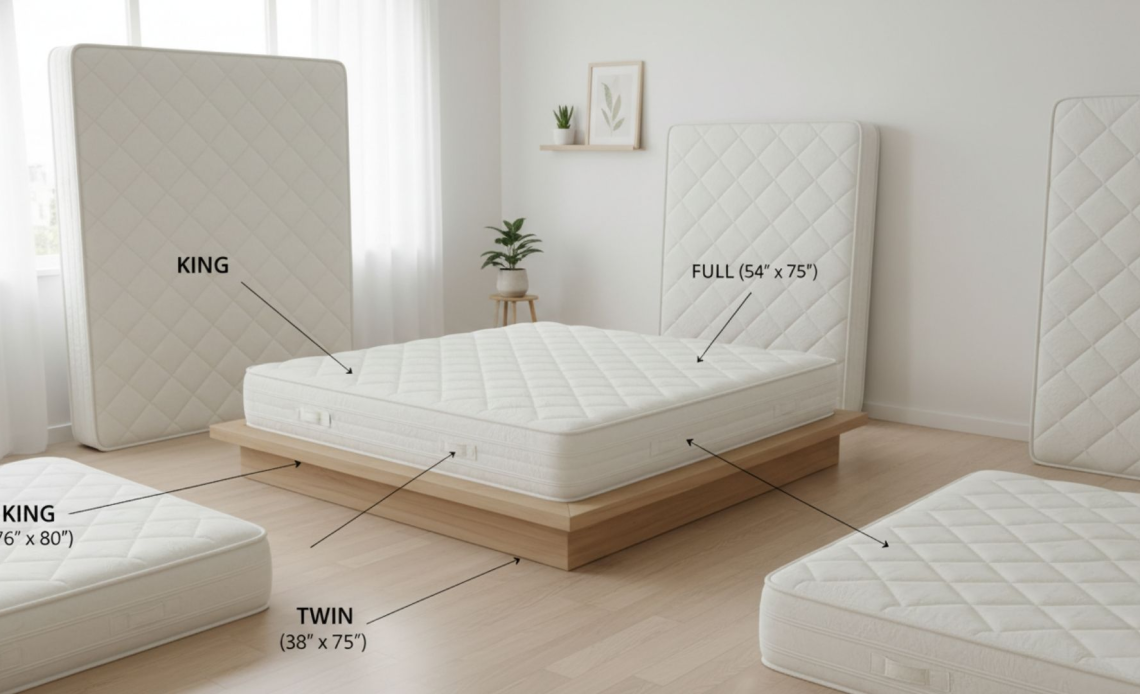
Before you think about frames, it helps to have the basic mattress sizes clear in your mind. Here are the standard sizes used in North America, which many other markets also follow:
- Twin: 38 x 75 inches
- Twin XL: 38 x 80 inches
- Full (Double): 54 x 75 inches
- Queen: 60 x 80 inches
- King: 76 x 80 inches
- California King: 72 x 84 inches
Exact dimensions can vary slightly by brand, but reputable manufacturers list the size clearly on the label and product page.
When in doubt, look for the measurements first and the size name second.
For platform beds, these dimensions matter more than on a bulky box spring bed, because the frame is visible and the mattress usually sits on a flat deck or slats rather than being recessed deeply.
Read More: Platform Bed Vs Box Spring: Which is better?
How Platform Bed Frames Are Sized?
Most platform bed frames are built to match standard mattress sizes with a small tolerance.
That tolerance allows you to place the mattress easily without having to force it between side rails.
Typically, a platform frame will:
- Be very close to the mattress size if it has a solid deck and minimal side rails.
- Be slightly wider and longer than the mattress if it has thicker rails or a visible border around the mattress.
- Include a shallow recess of around half an inch to one inch on each side in some models, so the mattress cannot slide easily.
Manufacturers sometimes describe this as the recommended mattress size for the frame.
If you already own a platform bed, check the specifications for the internal deck dimensions rather than the overall outer dimensions.
The outer size includes headboard, footboard, and decorative elements, which do not tell you how the mattress will sit.
Matching Mattress Size To Platform Style
The right mattress size for a platform bed does not depend only on the name on the label. The platform style, thickness of the mattress, and how you want the bed to look all play a role.
Low Profile Platform Beds
Low profile platforms sit close to the floor and rely on a clean, horizontal line. With these beds, you usually want the mattress to sit almost flush with the edge of the frame.
If the mattress is too small, you get obvious gaps that break the visual line. If it is too big, it can overhang the edges and make the bed feel top heavy.
For low platforms:
- Choose the exact standard mattress size recommended by the frame maker.
- Avoid mattress toppers that add several inches of overhang unless the frame has a wide deck.
- Keep mattress thickness in mind. Very thick mattresses can blunt the low, floating effect that people want from this style.
Platform Beds With Side Rails
Many wooden and upholstered platforms include pronounced side rails and a footboard. In these designs, the mattress should sit inside the rails, not on top of them.
A standard queen mattress on a queen platform with side rails usually fits with a small gap around the edges. That gap is intentional.
It gives you enough clearance to change sheets easily and avoid the feeling that the mattress is jammed into the frame.
If your mattress is oversized or unusually thick with heavy edge support, it may sit higher and appear slightly proud of the rails. That is not a problem structurally, but you should decide whether you like that look.
Floating or Cantilevered Platform Beds
Floating platforms are designed so that the base is recessed and hidden, making the bed appear to hover. Here, the mattress and upper deck are the main visual elements.
In this case, you want:
- A mattress size that matches the deck dimensions as closely as possible.
- Minimal overhang. If the mattress extends beyond the edge of the deck, it weakens the floating illusion.
- A thickness that complements the proportions. A very thin mattress on a wide floating deck can look undersized.
If you are buying the frame first, check the manufacturer’s notes on the ideal mattress thickness as well as size.
Read More: Sizes Of A Trundle Bed
When A Mattress Is Too Big Or Too Small?
Even a difference of one or two inches between the mattress and platform can affect both comfort and appearance.
Mattress Too Small
If the mattress is smaller than the frame:
- You will see gaps between the mattress and side rails.
- Pillows can slide down more easily at the head of the bed.
- The bed can feel less stable if the mattress shifts during the night.
Some people try to hide the gap with oversized bedding, but once you sit on the edge, you will feel the lack of support where the mattress ends and the frame begins.
Mattress Too Big
If the mattress is larger than the internal dimensions of the platform:
- It may sit on top of the rails rather than inside them.
- The corners can curl slightly as they fight the frame.
- Getting sheets and mattress protectors on becomes awkward.
Over time, constant pressure against the side rails can damage the mattress cover or weaken the frame joints, especially in lower cost beds.
Thickness And Comfort On A Platform Bed
Platform beds use either a solid deck or slats. Unlike box springs, they do not flex very much. This means that mattress thickness and construction become important.
On a solid platform:
- Thin mattresses can feel firmer, since there is no extra give beneath them.
- Thicker hybrid or memory foam models often work well, provided the frame can support the weight.
- You want enough thickness so that you do not feel the slats or deck through the comfort layers.
For a typical adult sleeper, mattress thickness in the range of 10 to 14 inches works well on most modern platform designs.
If you or your partner are heavier, leaning toward the thicker end of that range makes sense.
Height also affects usability. A low platform with a very thick mattress can still end up at a comfortable sitting height.
A tall platform with a thick mattress might put the sleeping surface higher than you like, especially for children or shorter adults.
Room Size And Aesthetics
Choosing mattress size for a platform bed is not only a technical fit. The bed is usually the largest piece of furniture in the room, so its proportions matter.
In a small bedroom, a full or queen mattress on a clean, low profile platform can feel lighter and more open than the same mattress on a bulky frame.
If you stretch to a king mattress but the room is tight, the bed can dominate the space and make circulation difficult.
Think about:
- Clearance around the bed. Ideally you want at least 24 inches on each accessible side for easy movement.
- Headboard width. Some platform beds include wide headboards or built in shelves that add to the perceived size.
- Bedding style. Minimalist bedding makes a large platform look calmer. Layered quilts and blankets can make the bed feel larger.
Match mattress size to both the frame and the room so that everything works together rather than fighting for space.
Practical Steps Before You Buy
To avoid surprises when your new mattress or platform bed arrives, take a few simple steps.
First, measure your existing mattress if you are keeping it. Do not rely only on the size name. Measure length, width, and thickness with a tape measure and note the values.
Second, measure your platform bed’s internal deck dimensions, not just the outside of the frame. If the deck is not easily visible because of upholstery, remove the mattress and check the slat or panel area.
Third, compare the two. Aim for a difference of no more than about one inch in either direction between the labeled mattress size and the internal deck dimension in each direction.
More than that and you will see or feel the mismatch.
Think about the long term. If you are likely to upgrade to a thicker mattress in the future, choose a platform design with enough headboard clearance and rail height to handle that change.
Read More: Futon Mattress Size Guide
Conclusion
The right mattress size for a platform bed is less about guessing and more about matching specific measurements.
Standard sizes like queen and king are useful labels, but the true fit depends on deck dimensions, frame style, mattress thickness, and the way you want the bed to look in your room.
Measure what you have, read the specifications for what you plan to buy, and aim for a clean, almost flush fit without overhang or obvious gaps.
When mattress and platform are in harmony, the bed not only looks better but also feels more stable, supportive, and comfortable every night.