
Alcohol cleaning hacks are everywhere. A quick mist of rubbing alcohol, they say, will disinfect your mattress, kill germs, and erase odors in minutes.
But you also hear that alcohol is flammable, can damage foam, and might not even sanitize a thick mattress properly.
Spraying a light mist of isopropyl (rubbing) alcohol on a mattress can be reasonably safe in specific situations, if you follow strict safety steps and use it sparingly.
It is not something you want to drench your bed with or rely on as your main mattress cleaning method.
What Spraying Alcohol On a Mattress Actually Does?
Rubbing alcohol, especially around 70 percent isopropyl, is an effective disinfectant on smooth, hard surfaces. It can quickly kill many bacteria and viruses and it evaporates fast.
On a mattress, alcohol can:
- Help disinfect the surface of the fabric
- Cut through some body oils and help with light odors
- Evaporate more quickly than water, so it does not stay damp for long
That is the upside. The catch is that a mattress is a porous, multi-layered object.
Alcohol sprayed on top does not soak evenly or stay in contact with germs long enough deep inside the foam to guarantee true disinfection of the whole mattress.
Most official disinfectant testing is done on hard, non-porous surfaces such as metal and sealed countertops, not on thick foam cores.
Think of alcohol spray as a surface freshener and spot disinfectant, not a magic reset button for a dirty mattress.
Read More: Queen Air Mattress Dimensions And Guide
Is It Really Safe?
1. Flammability: The Biggest Risk
Rubbing alcohol is highly flammable. It has a low flash point, which means its vapors can ignite at relatively low temperatures if there is a flame or spark nearby.
That matters on a mattress because:
- Vapors can linger in the fabric for a while, even after it feels dry
- Many people use heated blankets, mattress pads, candles, space heaters, or smoke in or near the bed
- Any residue in the fabric can make the surface easier to ignite if exposed to a strong heat source
If you spray alcohol on your mattress, you must:
- Keep it far from cigarettes, candles, lighters, incense, heaters, and hair dryers
- Let it air dry completely in a well-ventilated room before adding bedding or turning on any heat source
If there is any chance someone might smoke or light candles on or near that bed, alcohol spray is a bad idea.
2. Damage to Mattress Materials
Modern mattresses are built from layers of foam, adhesives, and fabrics, often with fire-retardant barriers and coatings. Strong solvents and repeated wetting can stress these materials.
Several mattress and bedding guides note that repeated use of alcohol or other harsh cleaners can deteriorate foams, weaken adhesives, or discolor fabrics over time, especially
if the mattress was never designed for solvent-based cleaners.
Possible issues include:
- Drying out or embrittling some foams, particularly low-quality polyurethane
- Weakening glue that bonds layers together
- Stripping or interfering with the flame-retardant layer
- Leaving watermarks or light patches on certain fabrics
Memory foam and latex are especially sensitive to liquids. Many care guides for these materials recommend minimal moisture and gentle cleaners and warn against harsh chemicals.
Heavy or frequent alcohol spraying on these mattresses is not wise and can void warranties.
3. Health and Indoor Air Quality
New mattresses already release small amounts of volatile organic compounds (VOCs) as they off-gas.
When you add more solvent (alcohol), you add more fumes into the room, especially in a small or poorly ventilated bedroom.
For most healthy adults, an occasional light mist probably will not cause issues.
But it can be irritating for:
- People with asthma or reactive airways
- Those with chemical sensitivities
- Young children and pets who spend a lot of time on the bed
If you ever feel dizzy, get a headache, or notice throat or eye irritation when using alcohol, stop and ventilate the room thoroughly.
Read More: What Is A Sleigh Bed? Everything You Should Know
When Using Alcohol On a Mattress Can Be Reasonable?
With all those cautions, there are situations where a light alcohol mist makes practical sense, provided you are careful.
Spot Disinfection After Bodily Fluids
If you have already cleaned and treated a small area after vomit, urine, or blood, a final light mist of alcohol on the top fabric can be a reasonable extra step to reduce surface germs.
Some mattress care guides suggest this kind of targeted use after you have cleaned with mild detergent or an enzyme cleaner, and then fully blotted and dried the spot.
Quick Freshen-Up Between Deep Cleans
A few professional cleaning articles describe using a fine mist of rubbing alcohol as a final, light refresh after vacuuming and deodorizing a mattress.
They emphasize not soaking the mattress and allowing it to dry completely before making the bed. This should be an occasional hygiene step, not a daily habit.
How To Spray Alcohol On a Mattress More Safely? (If You Choose To)
If you decide to use alcohol in a limited, careful way, follow a strict process.
Check the Label and Warranty
Look for cleaning instructions on the mattress tag or manufacturer’s website.
Many brands tell you to avoid harsh chemicals and solvent cleaners. If the label forbids them, skip the alcohol and use safer methods.
Choose the Right Product
Use plain isopropyl (rubbing) alcohol, ideally around 70 percent. It is strong enough for disinfection but not so concentrated that it flashes off before it can work on microbes.
Avoid:
- Colored or perfumed alcohols
- Denatured alcohol or industrial solvents
- Alcohol mixed with other random cleaners
Ventilate Well
Open windows and doors. If possible, run a fan to move air across the mattress and out of the room. Good airflow reduces fume buildup and helps the alcohol evaporate quickly.
Patch Test
On a hidden corner or along the side:
- Lightly mist a very small area
- Let it dry fully
- Check for discoloration, stiffness, or fabric damage
If you see any change, do not use alcohol on the rest of the mattress.
Light Mist Only, Never Soak
- Strip the bed and vacuum the mattress first so you are not spraying alcohol onto dust, hair, and crumbs
- Use a spray bottle that produces a fine mist
- Hold it 20 to 30 cm from the surface
- Mist lightly over the area you want to treat, just enough to dampen the top fabric
If the mattress looks wet or feels squishy, you have gone too far.
Let It Dry Completely and Avoid Heat
Allow the mattress to air dry until there is no smell of alcohol at all and the fabric feels bone dry.
Do not:
- Use a hair dryer or space heater on it
- Turn on an electric blanket or heated pad
- Smoke or light candles near the bed
Only once it is fully dry should you put bedding back on.
Read More: How To Mix And Match Bedroom Furniture?
When You Should Not Spray Alcohol On a Mattress?
Skip the alcohol in these cases:
- You rely on open flames or strong heat near the bed
Smoking, candles, incense near the headboard, or a heater pointed at the bed are all incompatible with an alcohol treated surface. - It is a memory foam or latex mattress with strict care instructions
Many of these warn against solvents and excess moisture. Follow the manufacturer rather than internet hacks. - Someone in the home has asthma or strong sensitivity to chemical smells
Extra fumes from alcohol are not worth it. - You are trying to treat bed bugs or a serious pest issue
Alcohol sprays might kill a few bugs on contact but they do not reach hidden eggs and can spread the infestation while increasing fire risk. A professional heat or chemical treatment is far more effective and safer long term. - The mattress is already old, sagging, and full of deep stains
No amount of alcohol mist will restore it. At that point, focus on a protector and start planning a replacement.
Ways To Clean and Disinfect a Mattress
Alcohol should never be your main mattress care strategy. For routine hygiene, you are far better served by a simple, layered approach:
- Vacuum regularly
Use an upholstery attachment every few weeks to pull up dust, dead skin, and allergens from the surface and seams. - Deodorize with baking soda
Sprinkle lightly, leave for several hours, then vacuum thoroughly. This helps with odors without adding liquid. - Treat stains with targeted cleaners
Use mild detergent or enzyme cleaners for body fluids, and blot rather than scrub. Keep moisture to a minimum and allow plenty of drying time. - Use hot water on bedding, not the mattress
Washing sheets and protectors in hot water kills most germs effectively, and is far more thorough than misting a mattress surface. - Invest in a good mattress protector
A waterproof yet breathable protector is the single easiest way to keep spills, sweat, and allergens out of the mattress core so you do not have to disinfect it often. - Consider steam cleaning where allowed
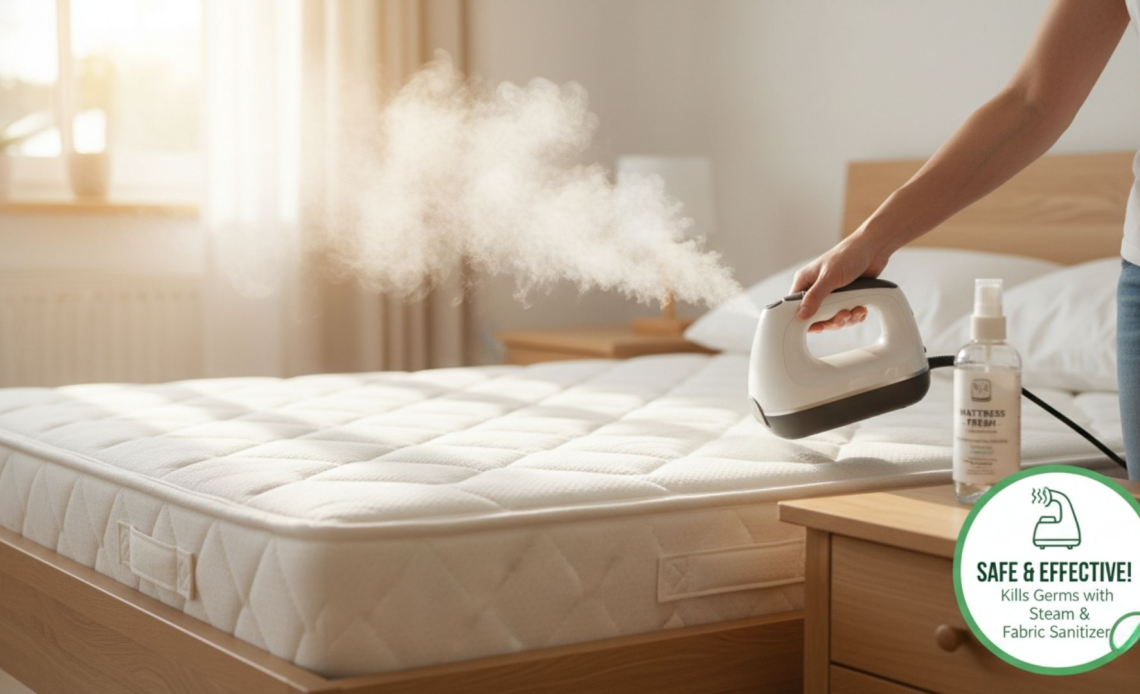
Some mattresses tolerate professional or consumer steam cleaning, which can help sanitize without chemicals. Always check the manufacturer first, since heat and moisture can also damage certain foams.
Read More: Saving Space with 10 Multifunctional Furniture Ideas for Stylish Small Living
Conclusion
Used rarely, in a well-ventilated room, as a light mist on the surface and kept far from heat sources, spraying or rubbing alcohol on a mattress can be reasonably safe.
It can help with quick surface disinfection after a mess or as a finishing touch on a cleaned and dried spot.
Alcohol is flammable, can be harsh on some mattress materials, and is not a reliable way to sanitize the thick interior of a mattress. For most people, it should be a niche tool, not a regular routine.
If you like the idea of a fresh, clean bed, you will get better results and less risk from simple habits, such as vacuuming, baking soda, prompt stain treatment, hot laundry cycles, and a quality mattress protector.
Reach for alcohol only when you truly need a surgical strike, not every time you change the sheets.