
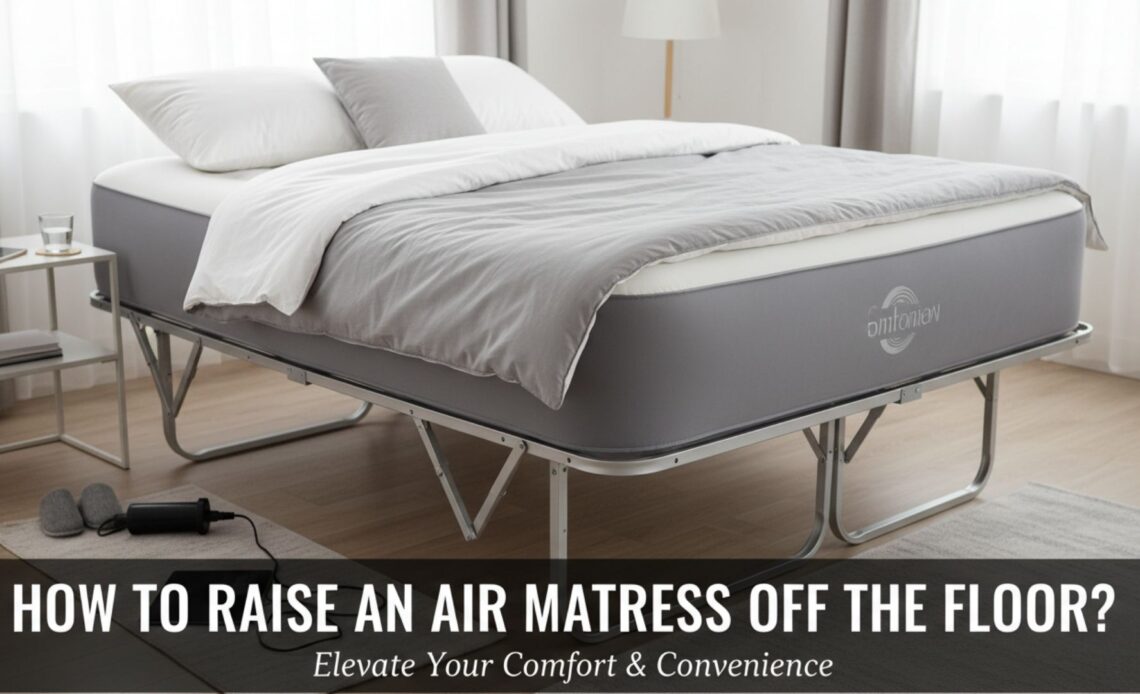
If your air mattress is living directly on the floor, you are not alone. It is the quickest way to get a guest bed ready.
It is also colder, less comfortable, harder to get in and out of, and more prone to moisture and mold problems over time.
Elevating an air mattress fixes most of those issues and makes a temporary bed feel much more like a real one.
Below is a practical guide to raising an air mattress off the floor, from quick fixes to sturdy long term solutions, plus important safety tips you should not skip.
Why Get Your Air Mattress Off The Floor?
Sleeping on an air mattress that sits on tile, concrete, or hardwood means your body heat is leaking into the floor all night.
A layer of air under the mattress adds insulation, which helps keep you warmer and more comfortable.
Ventilation is just as important. When a mattress rests directly on a cool floor, moisture from your body and from the room has nowhere to go.
Over time it can condense under the bed and create a pocket of stale, damp air that encourages mold and mildew. That is not only bad for the mattress, it can also trigger allergies or breathing issues.
Getting the mattress off the floor also helps with:
- Cleanliness: Less dust, pet hair, and insects right at sleep level.
- Ease of use: A higher sleep surface is more comfortable for older guests, anyone with joint pain, or just getting up in the dark.
- Aesthetics: A raised air bed, with a simple frame and bedding, looks more like a proper guest bed and less like camping gear.
The good news is you do not have to spend a fortune to get these benefits, as long as you choose the right support and set it up safely.
Ground Rules Before You Raise It
Before you build or buy any base, keep these fundamentals in mind.
- Support must be flat, even, and strong: Air mattresses distribute weight differently from traditional foam coils. Any gaps, sharp edges, or uneven pressure points underneath can cause sagging or even punctures. Flat platforms, closely spaced slats, and grid style frames are ideal.
- Airflow matters as much as support: Solid, unventilated surfaces trap moisture. Slatted bases and ventilated platforms let air move and help the underside of the mattress dry between uses, which is a key factor in preventing mold.
- Know your weight limits: Add up the weight of the heaviest expected sleeper plus bedding. Make sure the frame, pallets, or crates you use are rated safely above that.
- Protect the mattress fabric: Any DIY solution must be smooth and splinter free. Sand rough wood, cover exposed screws or brackets, and consider a thin barrier layer such as a moving blanket, yoga mat, or non slip rug pad.
Once you have these basics in place, you can choose the style of elevation that fits your budget and how long you plan to use the setup.
Read More: Best 8 Sofa Bed Mattresses
Use A Purpose Built Air Mattress Frame
Several brands sell folding frames designed specifically for air mattresses. These usually have a lattice or grid of metal supports, fold up like a camp cot, and often come packaged with a matching air bed.
The advantages are straightforward:
- The support surface is already flat and designed to match the mattress footprint.
- Legs are engineered to carry typical adult weight safely.
- The whole thing folds away easily when guests leave.
If you host regularly and do not want a full guest bed permanently set up, this is one of the least stressful options.
Just make sure the frame you buy matches the exact size of your air mattress (twin, full, queen, or king) and that the leg bracing feels solid when you test it.
Put It On A Platform Bed Or Box Spring
If you already own a spare bed frame or box spring, you may be able to use what you have.
Using a platform or divan style base
A solid platform bed or box spring can work for an air mattress as long as the surface is smooth and strong. The benefit is instant height and a real bed look with a headboard and frame.
To set it up safely:
- Inspect the top surface for staples, rough fabric, or hardware that could rub the bottom of the air bed.
- Lay down a protective layer such as a thick fitted sheet, a moving blanket, or a smooth mattress pad to reduce friction.
- Place the air mattress on top and check that it does not hang past the edges of the platform.
Solid platforms restrict airflow a bit more than slats, so it is smart to lift the mattress periodically and let the base air out, especially in humid climates.
Using a slatted bed frame with plywood
Many people place plywood over slats to create a flat surface for an air bed. This works, but ventilation is crucial.
Experts advise drilling holes in the board to allow air movement and prevent trapped moisture under the mattress.
Here is a practical way to do it:
- Cut a sheet of plywood to match the inner dimensions of the bed frame.
- Sand all edges and corners until they are completely smooth.
- Drill ventilation holes in a grid pattern across the board.
- Lay the plywood on the slats, then add a thin pad or blanket before putting the air mattress on top.
This gives you a strong, flat platform while still allowing some airflow underneath.
Read More: What Are The Mattress Sizes?
Build A Simple DIY Base
If you are handy or working with a tight budget, a DIY base can lift the mattress and add storage at the same time.
Pallet platform
Clean, sanded wooden pallets can form a sturdy, breathable base because the gaps between boards naturally promote airflow.
Stack them to your desired height, secure them together with brackets or screws, and top with a smooth board or thick blanket to protect the mattress.
Always inspect pallets carefully for nails, staples, or spills, and avoid any that smell of chemicals.
Storage cube or crate base
Sturdy wooden crates or cube shelves laid on their sides can act like modular bed risers. Line them up under the footprint of the mattress, secure them together, and enjoy the bonus storage in each cube.
Add a board or thick pad over the top to create a continuous surface.
A DIY base like this suits a guest room, studio apartment, or multipurpose space where you want a bit of height without committing to a full traditional bed.
Low Profile And Temporary Solutions
Sometimes you just need to be off the floor for a weekend.
A camping cot is one of the easiest quick fixes. If the cot is rated for the combined weight of sleeper plus mattress and is close to the same size, you can set the air bed right on top.
The cot fabric and support bars provide elevation and airflow while the air mattress adds comfort. Check for any sharp corners, and consider a blanket between the two for extra protection.
For very short stays, you can at least create a warmer, slightly raised surface by layering thick foam tiles or gym mats, then placing the mattress on top.
While this does not create true under bed airflow, it does add insulation and makes the setup more comfortable than bare floor.
How High Should You Raise An Air Mattress?
There is no strict rule, but there are a few helpful targets.
Many traditional beds sit somewhere between the height of a dining chair and a little above it, which makes standing up and sitting down feel natural.
For most adults, a combined height in the range of roughly knee to mid thigh level is comfortable. An air mattress that is already tall can reach that range with a low platform or simple frame.
A thin camping style mattress may need more elevation or a double stack of bases. For young children, a lower height is often safer, since rolling out of bed will not mean a long drop.
The right answer is whatever allows you or your guests to sit on the edge of the bed with feet flat on the floor and stand up without strain.
Read More: 10 Best Floor Mattress
Safety And Maintenance Tips After You Raise It
Raising the mattress is only half the job. Keeping it clean, dry, and safe will decide how long it lasts.
- Check underneath regularly: Every week or two, lift one edge of the mattress and feel the underside and the base. If it is cool and slightly damp, prop the mattress up fully and let air flow around it until everything is dry. If you ever see or smell signs of mold, stop using it until you have cleaned it properly or replaced it.
- Control humidity in the room: Mold thrives in damp spaces. Many indoor air quality guides recommend keeping bedroom humidity under about 60 percent, using ventilation and a dehumidifier if needed.
- Let the mattress breathe: Even with a frame, it helps to air the bed out now and then. Lifting or standing the mattress on its side for a few hours can evaporate any trapped moisture and keep odors from developing.
- Inflate sensibly: Follow the manufacturer’s instructions rather than topping it up until it feels rock hard. Overinflation stresses seams and can shorten the life of the mattress, especially when combined with the extra leverage from a higher frame.
- Use protection: A fitted sheet plus a mattress protector makes cleaning easier, keeps skin oils and spills away from the vinyl surface, and adds a bit of comfort. If pets are allowed on the bed, a thicker topper or blanket will help protect against claws.
With these habits in place, an elevated air mattress can serve comfortably for guests, short term living, or transitional housing without turning into a musty, sagging nuisance.
Conclusion
Raising an air mattress off the floor is less about looks and more about comfort, cleanliness, and long term durability.
Whether you choose a ready-made folding frame, repurpose a platform bed, or build a simple base from pallets or crates, the essentials stay the same solid support, decent airflow, and protection for the mattress fabric.
Combine the right base with basic maintenance and humidity control, and your “temporary” bed will feel far closer to a real one every time you lie down.