
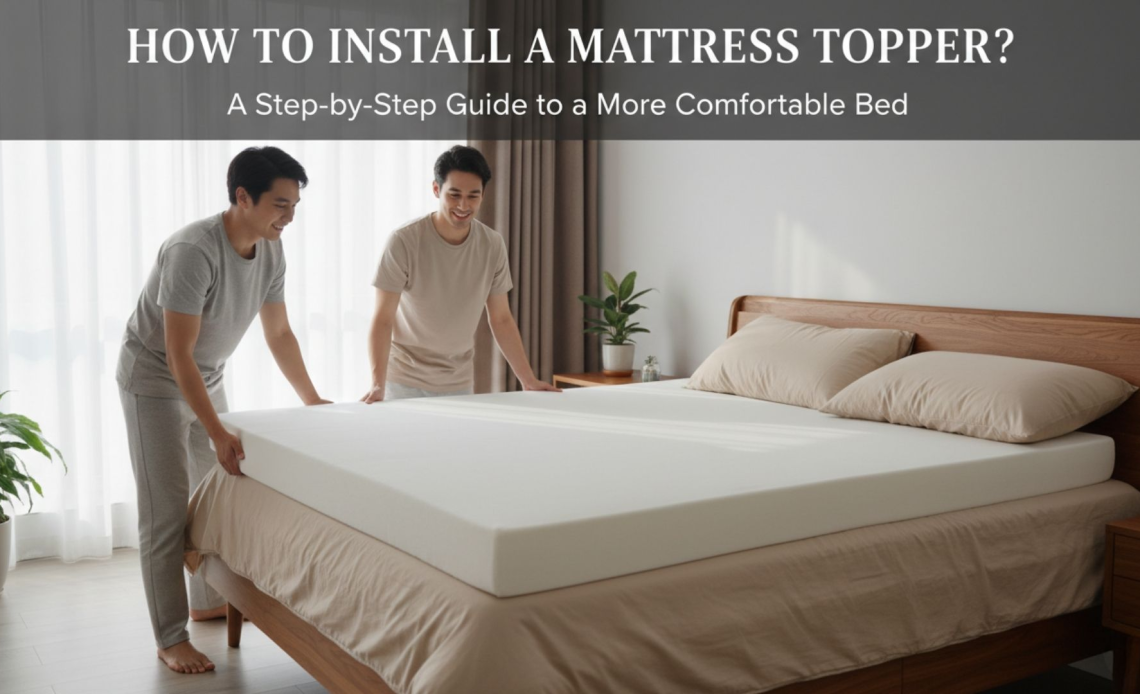
A mattress topper is one of the fastest ways to change how your bed feels without buying a whole new mattress.
The trick is that a topper only works as well as it is installed. If it slides, bunches, or traps heat because it is not sitting right, you will notice it every single night.
Installing a topper is not complicated, but it does require a little prep. Different materials behave differently, and small details like orientation and sizing matter. What you put over it can be the difference between a hotel bed and why this is moving under me.
Below is a practical, no-fuss way to install a mattress topper correctly, plus what to do if it will not stay in place.
Choose the Right Topper for Your Bed
A topper should match your mattress size and shape. If your mattress has deep rounding at the corners, a very rigid foam topper may overhang slightly until it relaxes.
If your mattress is extra tall, you may need deeper pocket sheets or a topper cover with strong corner straps.
Thickness matters for handling, too. A thin fiberfill or down alternative topper installs like bedding. A thicker foam or latex topper behaves more like a flexible slab and needs a bit more patience to lay flat.
If you are on the fence about size, do not size up to “get more coverage.” A larger topper is more likely to wrinkle and shift. The cleanest fit is almost always the exact mattress size.
Clear the Bed and Set Yourself Up for an Easy Install
Start with a bare mattress. Remove sheets, mattress protector, and anything that adds friction or bulk. If you use a mattress pad that already changes the feel of the bed, decide now whether you still need it. Stacking soft layers can feel cozy, but too many layers tend to slide.
Give yourself space. Pull the bed slightly away from the wall if you can. If you have a heavy topper, having access to all sides makes a big difference.
It also helps to quickly check the mattress surface. If it is dusty, wipe it down and let it dry. A clean, dry surface helps the topper grip and sit evenly.
Read More: Best Mattress Toppers 2026: Top 10 Picks
Unbox the Topper Without Damaging It
Most foam and latex toppers arrive compressed and rolled. Open the packaging on the bed, not on the floor. That way, you are not dragging a newly unwrapped topper across the room and picking up lint or grit.
Use scissors carefully and keep the blades shallow. Avoid cutting toward the topper, especially with soft foams that can nick easily. If there is an inner plastic sleeve, open that slowly and let the topper relax.
If your topper has a fabric cover, unzip it only if the manufacturer specifically recommends doing so during expansion. Some covers are meant to stay on to help the topper settle into shape.
Let It Air Out and Expand (Especially for Foam)
Foam toppers often need time to regain their full shape after shipping. This is normal. Give it a few hours at minimum, and plan for longer if the topper still looks compressed at the corners or along the edges.
If there is a noticeable new foam smell, airflow helps. Crack a window, run a fan, and avoid covering the topper immediately with a protector and sheets. Trapping the topper under layers too soon can slow down airing out.
Expansion time varies by material and brand, so treat the packaging instructions as the final word. If the topper still looks misshapen after the recommended window, give it more time before you judge the fit.
Place the Topper on the Mattress the Right Way
Many toppers have a top side and a bottom side. Egg crate foam has peaks and valleys that should face up unless the product guide says otherwise.
Zoned toppers may have a head and foot end. Some gel infused foams have a specific orientation so the surface performs as intended.
If the topper has a label, that is usually your clue. If it has a textured side and a smoother side, the smoother side often goes down for better contact with the mattress, while the textured side is meant for your body. Again, follow the specific product instructions when available.
Once you are confident about the orientation, center the topper on the mattress. Line up the top corners first, then adjust the bottom corners. Do not tug aggressively. Instead, lift and reposition in small moves so the topper does not stretch or tear.
Smooth It Flat So You Do Not Trap Wrinkles
Wrinkles are the root of most topper problems. They create pressure points and encourage shifting.
Start at the center of the topper and use flat palms to push air and bunch outward toward the edges. Work your way around the bed. If it is a foam topper, lift one corner slightly and let it settle back down instead of dragging it across the mattress.
If your topper is latex, it may feel a bit grippy and heavy. That is a good thing once it is in place, but it can be awkward during installation. For latex, lifting and setting is much easier than sliding.
Read More: Key Factors to Consider When Choosing the Best Mattress Removal Method
Lock It In: Three Reliable Ways to Keep a Topper From Moving
How you secure the topper depends on the type you bought and how active you are.
Use a fitted topper cover or encasement
A topper cover with corner straps or a full encasement is the cleanest solution. It adds structure, keeps the surface protected, and helps prevent shifting without changing the feel too much.
If you prefer a “bare topper” feel, choose a cover made of a thin, stretchy knit rather than a thick quilted fabric.
Add a mattress protector over the topper
A protector over the topper creates one unified sleep surface. It also keeps sweat and spills from soaking into foam, which is important because most foam toppers cannot be truly washed.
Look for protectors with deep pockets if your mattress plus topper height is tall. A too tight protector will pull the topper and cause curling at the edges.
Use nonslip grip between the topper and mattress
If the topper keeps skating on a smooth mattress, a thin nonslip pad can help. The goal is subtle grip, not bulk. Avoid anything very thick that creates ridges under the topper.
This method is especially useful for thinner toppers that do not have much weight to hold themselves in place.
If you want the simplest path and you are not sure what to pick, a topper cover with strong corner straps is usually the most straightforward fix.
Put the Sheets Back On Without Shifting Everything
This is the moment many installs go sideways.
Use deep pocket fitted sheets if needed. If you force a too small fitted sheet over a topper, it will pull the topper off center while you wrestle the corners into place.
Start with the head of the bed. Fit the corners slowly, then move to the foot. As you pull the sheet down, keep one hand flat on the topper edge to hold it in place. Do a final smoothing pass across the sleep surface once the sheet is on.
If you are using a flat sheet and duvet, you are done. If you use tight hospital corners, be aware that very tight tucking can pull on the fitted sheet and encourage shifting. A slightly looser tuck often works better with toppers.
Common Installation Problems and How to Fix Them
The topper slides around at night
This usually means there is not enough friction between layers, or the sheet is pulling it around. Add a topper cover with straps, add a protector over the topper, or place a thin nonslip layer beneath it. Also double check you are using the correct size topper.
The corners curl or the topper overhangs
Foam that is still expanding can curl slightly. Give it more time to settle before you try to force it flat. If it remains curled after a full expansion period, check whether your mattress has unusually rounded corners or if the topper is slightly oversized.
A topper that is a touch too large tends to buckle. In that case, exchanging for the correct size is better than fighting it every night.
It feels hotter than expected
Heat issues are often made worse by the layers above the topper. A thick protector, flannel sheets, or a non-breathable cover can trap warmth. Try a more breathable protector, percale sheets, or a lighter topper cover.
If your room runs warm, avoid stacking multiple plush layers, since trapped air and dense fabrics can hold heat.
The bed feels uneven
Make sure the topper is centered and fully flat. If your mattress has a noticeable dip, a soft topper can mirror that dip.
A topper can improve comfort, but it cannot fix structural sagging. If you are feeling a deep valley, the mattress may need support or replacement.
Read More: Best 12 Weighted Blanket Deals
Care After Installation: Make It Last Longer
Once installed, rotate the topper every so often, especially if you sleep in the same spot nightly. Rotation helps wear stay more even.
Protect it. Foam absorbs moisture and oils, which can shorten its life and affect its feel. A breathable protector is a small upgrade that pays off.
If your topper has a removable cover, follow the care label. Many covers can be washed, but the foam itself usually cannot. Spot clean the foam only if needed, and let it dry fully before remaking the bed.
Conclusion
Installing a mattress topper is mostly about patience and layering. Get the orientation right, let the topper settle, smooth it flat, and secure it with the right combination of cover, protector, and properly sized sheets.
Do that once, and you will not have to think about it again, which is the whole point of a comfort upgrade.