
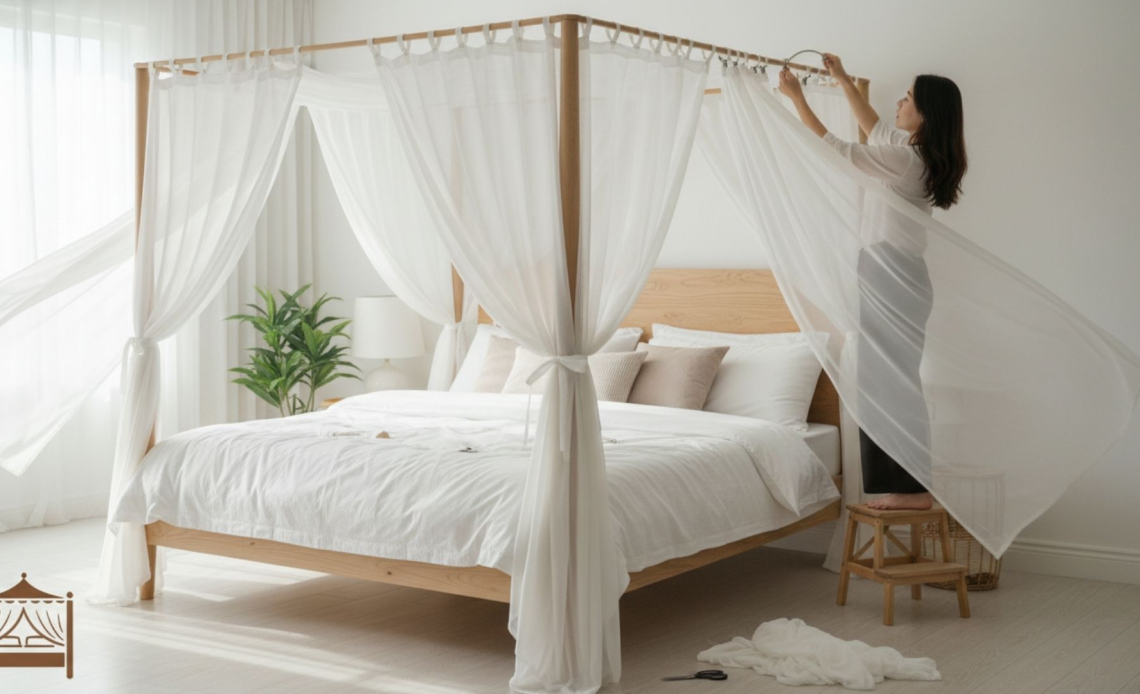
A canopy bed with soft sheers instantly changes the mood of a room. The frame that looked a little bare suddenly feels romantic, private, and polished, without blocking too much light.
The trick is getting those sheers hung in a way that looks intentional rather than improvised.
Below is a practical, step by step guide that covers everything from measurements and hardware to layout ideas and safety, so your bed looks styled, not messy.
Choose The Right Sheers Before You Hang Anything
Resist the urge to buy the first pretty panels you see. The right fabric and size will make hanging much easier and the finished result far more luxurious.
Start by measuring your bed. Note the length and width of the frame, the height of the posts, and the distance between any top rails.
Standard canopy beds often sit around two meters high, but dimensions vary widely, so rely on your tape measure rather than assumptions.
For a full, flowing look, you want generous fabric. Aim for at least twice the width of each side you want to cover.
If your bed is 150 centimeters wide, two panels at 150 centimeters each will fall fairly flat, while panels closer to 250 to 300 centimeters each will drape in soft waves.
Sheers designed as curtains are usually labeled with both width and drop, which makes this easier to judge.
Pay attention to material. Classic voile is light and airy, polyester chiffon feels floaty, and cotton blends give a slightly more structured fall.
If your posts have carved edges or metal corners, a slightly sturdier sheer will resist snagging better than a very delicate net.
Choose a drop that works with your vision. Floor grazing sheers feel dramatic, while panels that stop a few centimeters above the floor are easier to keep clean.
If you plan to tie them back daily, a little extra length creates a pretty puddle.
Read More: 5 Easy Bed Riser Alternatives
Plan Your Layout And Look
Before you touch a ladder, decide how you want the sheers to behave. There are a few classic layouts that work on most canopy frames.
One option is full enclosure. Sheers run around all four sides and can be drawn completely closed at night. This works well if you want more privacy or to soften morning light.
Another is corner draping. Here you hang long panels at each corner and swoop them inward over the rails, letting them spill down the posts. The bed remains mostly open, but you get a romantic, relaxed feel.
A third approach is a headboard halo. Sheers fall primarily behind the head of the bed, sometimes with a soft canopy over the top rails, creating a backdrop without enclosing the whole frame.
Sketching a quick top view on paper or taking a photo of your bed and drawing on it with your phone helps you visualize how many panels you actually need and where they should start and stop.
Gather Basic Tools And Hardware
Most canopy beds with existing rails make hanging sheers quite straightforward.
You will usually need curtain rings or clips if your sheers do not have rod pockets, a small step ladder, a tape measure, and a screwdriver or hex key if you need to remove a rail briefly.
If your bed has no upper rails or you want sheers that float outside the frame, you will add hardware like ceiling mounted tracks, standard curtain rods, or tension rods, along with the correct anchors and screws for your ceiling type.
Ceiling track systems designed for curtains are particularly neat around beds because they allow fabric to glide smoothly and can be cut to size to follow the outline of the mattress.
Lay everything out before you start so you are not climbing up and down repeatedly looking for missing pieces.
Hanging Sheers On A Canopy With Rails
If your canopy has rails connecting the posts at the top, use them. They are already in the perfect position for fabric.
Start by preparing the sheers. If they came folded, give them a quick press on a low setting or hang them in a steamy bathroom so creases relax. This makes it easier to judge how they will hang.
Decide how each panel will run. For full enclosure, plan at least one panel per side, or two for the longer sides if you want more fullness.
For simple corner draping, you might assign one long panel to each rail, with the center pooling in the middle.
If your sheers have rod pockets, you can often slide them directly over the canopy rails. In some cases, dismantling one side of the frame briefly is the easiest way.
Loosen the screws at one corner, remove the rail, feed the panels on in order, then reattach the rail and tighten the hardware again. Where you cannot dismantle the bed, there is a workaround.
Thread a length of strong rope or curtain wire through the pocket of the sheer, tie the rope tightly around the rail, and then adjust the fabric to hide the rope.
The sheers will hang just below the metal bar and still look like they belong.
Space the fabric evenly. Stand back regularly and check that pleats and folds are balanced from side to side. If one corner looks heavy, slide a little fabric along the rail until everything feels symmetrical.
Finish by deciding how the sheers will fall. You might let them hang straight for a modern look or gently twist them once around each post for a softer, more cocooned feel.
Read More: 12 Best Bed Frames
Hanging Sheers When Your Bed Has No Rails
Many modern canopy frames consist of four posts with no connecting rails, or only a single bar at the head and foot. You bring the support to the bed.
One method is a ceiling track system. Place the track pieces on the floor around the bed to plan your layout, cut any sections to length, then mark and drill mounting points in the ceiling.
Once the fittings are secured, click the tracks in, add gliders or hooks, and hang the sheers. The result feels like a built in canopy that floats above the bed.
For renters who prefer not to drill, combine adhesive hooks with lightweight curtain rods. Position hooks along the ceiling or on the tops of the posts, snap slim rods into place, then slide on the sheers.
This approach works best with very light fabric and shorter rods in order to stay within the weight limit of the adhesive.
Tension rods can also be tucked between walls if your bed sits in an alcove, creating a simple frame for sheers without permanent fixings. Just ensure the rods are firmly wedged and rated for the span you need.
Style, Care, And Safety Tips
Once the sheers are up, a little styling makes the difference between a dreamy cocoon and visual clutter.
Keep the rest of the bedding fairly simple. Solid white or a single soft color lets the fabric be the star and avoids competing patterns.
If you love prints, keep them on pillows and throws that sit inside the canopy rather than on the sheers themselves.
Tiebacks can change the look entirely. Soft fabric ties or simple cords at the posts allow you to pull curtains open during the day and release them at night. Fasten them at about hip height for the most flattering lines.
Pay attention to dust. Sheer fabric collects particles easily, especially above your head. Choose panels that can go into the washing machine and plan a regular cleaning routine so they stay fresh.
Most importantly, think about fire safety. Keep fairy lights, bedside lamps, heaters, and candles at least about a meter or three feet away from your sheers and any other dangling fabric.
Electrical decorations and light bulbs generate heat and can ignite nearby textiles if they sit too close, especially over time.
Use only cool running string lights that are rated for indoor use, check cables for damage before hanging them, and always switch them off at night or when you leave the room.
Common Mistakes To Avoid
There are a few pitfalls that can make even expensive sheers look awkward.
The first is buying panels that are too short. Anything that hovers mid wall tends to look accidental. If in doubt, go longer and hem later.
The second is skimping on fabric. Thin coverage may save money, but it also shows every post and corner through the cloth. Fullness hides the hardware and makes the canopy feel intentional.
Third, do not rely on light adhesive hooks for heavy fabric or long rods. If you want a fully enclosed, floor length canopy, invest in proper ceiling anchors or secure rails on the frame itself.
Do not forget access. Make sure you can get in and out of bed without wrestling with the sheers. Leave generous openings at the foot or sides, or use tiebacks where you naturally walk.
Read More: How To Build A Trundle Bed?
Conclusion
Hanging sheers on a canopy bed is less about complicated carpentry and more about planning.
Measure carefully, choose generous fabric, pick the right support system, and install everything with safety in mind.
Done well, a simple set of sheers can turn an everyday bed into the calm centerpiece of your bedroom.