
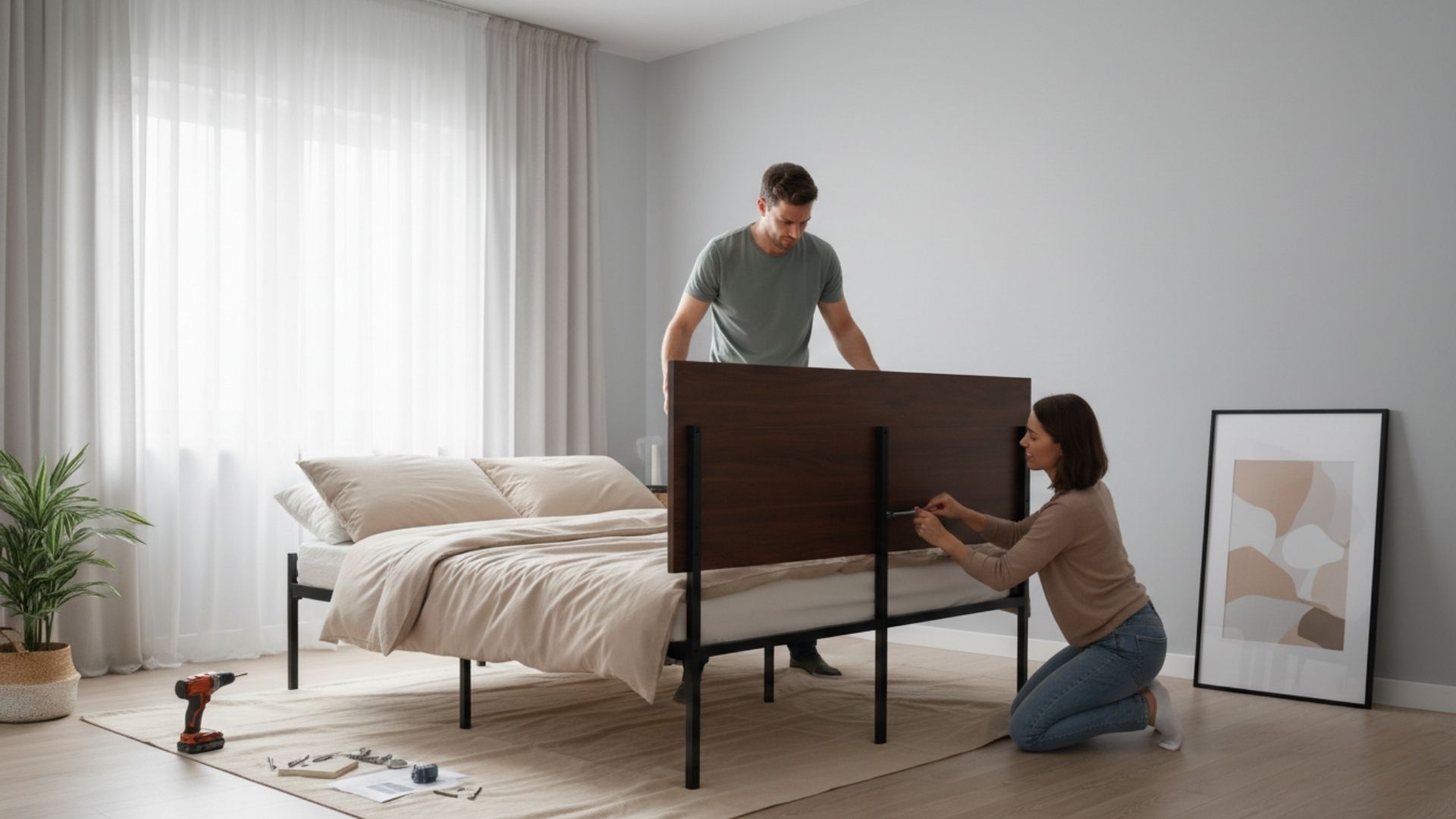
A headboard can make a bed look finished, protect the wall from scuffs, and give you a sturdier backrest for reading. The part that trips people up is not the headboard itself, it is the connection.
Bed frames vary a lot, and the right method depends on what you are attaching to: a metal frame with slotted brackets, a platform bed with predrilled holes, an adjustable base, or a simple Hollywood frame that was never meant for a headboard in the first place.
The good news is that most headboards can be mounted securely with basic tools if you match the hardware to your frame and take a few minutes to align everything.
Below is a practical, step by step approach that covers the most common setups, plus fixes for wobbles, height issues, and mismatched holes.
Before You Start, Identify What You Have
Start by checking two things: the type of bed frame and the type of headboard mounting.
Many headboards are designed to bolt to a frame using two vertical legs, sometimes called struts. The legs usually have a row of holes or slots for height adjustment. Many bed frames have headboard brackets at the head of the bed, either welded on or attachable.
If you have a platform bed with a solid headboard already built in, you may not need anything here. If you have a separate headboard panel, these instructions will help you connect it to the base.
Tools and Hardware You Will Actually Use
You do not need a full workshop. You do need the right fasteners and a way to tighten them properly.
A short list is genuinely helpful here:
- Tape measure and pencil
- Adjustable wrench or socket set
- Allen key set if your frame uses hex bolts
- Screwdriver
- Level (or a phone level)
- Bolts, washers, and nuts that fit your frame and headboard holes
- Optional: headboard bracket kit or adapter plates if holes do not line up
Avoid whatever bolts are lying around. If the bolt diameter is too small for the hole, the headboard will rock over time, even if you tighten it hard.
Read More: 10 Budget-friendly Home Decor Ideas That Look Luxury
Measure and Plan for the Correct Height
Headboards look best when the top edge sits high enough above the mattress to be visible with pillows in place. Before you bolt anything down, place the headboard behind the bed and roughly position it where you want it.
Consider the mattress height and whether you use a thick topper. If you plan to change mattresses soon, aim for a slightly higher setting so the headboard does not disappear later.
How to Attach a Headboard to a Metal Bed Frame With Brackets?
First, pull the bed away from the wall so you can work comfortably. Remove pillows and bedding so you can see the frame rails clearly.
If your frame has removable headboard brackets, attach them now at the head of the bed. Some frames come with L-shaped brackets that bolt to the side rails near the top corners.
Next, stand the headboard behind the frame with its legs lined up near the brackets. If you are working alone, lean the headboard against the wall with a blanket behind it to prevent scratches.
Align the holes in the headboard legs with the holes or slots in the frame brackets. Insert bolts from the outside in so the nut ends up on the inside, where it is less likely to snag bedding.
Add a washer under the bolt head and another washer under the nut if you have them. Washers spread the load and reduce loosening.
Thread the nuts on by hand first. Do not fully tighten one side while the other side is still loose. Snug both sides gradually, check that the headboard is centred, then tighten firmly.
Lastly, push down and gently shake the headboard. A secure mount should not rattle or sway. If it moves, you likely need thicker washers, a tighter fit bolt, or better alignment in the slots.
How to Attach a Headboard to a Platform Bed?
Platform beds vary. Some have predrilled holes in the headboard area of the side rails. Others use a separate bracket system.
If your platform bed has predrilled holes, the process is straightforward. Locate the holes at the head end of the rails.
Hold the headboard in place and match its leg holes to the bed’s holes. Use bolts long enough to pass through both pieces with room for a washer and nut, but not so long that they bottom out against wood or protrude awkwardly.
If the platform bed is wood and uses wood screws rather than through bolts, be cautious. A headboard has leverage, and screws can loosen over time if they are not designed for structural use.
If possible, use through bolts with washers and nuts, or use the manufacturer’s recommended hardware.
If there are no holes, look for a bracket kit intended for headboards on wooden frames. These kits typically attach to the inside of the rails and give you slotted metal plates to bolt the headboard to. The slotted plates also help you fine tune height.
Read More: How To Install A Mattress Topper?
How to Attach a Headboard to a Frame Without Brackets?
Some basic frames are sold as “universal” but do not include headboard brackets in the box. Others, especially older Hollywood style frames, may have only a simple upright at the head.
In this situation, you have three realistic options.
The first is to buy a headboard bracket kit made for your frame. Many kits clamp or bolt to the side rails and provide slotted mounting points. This is usually the best approach because it creates a proper metal to metal connection.
The second is to use adapter plates. These are flat metal plates with multiple hole patterns. They are useful when your headboard holes do not match your frame bracket holes. Adapter plates can also help when the headboard legs are narrower or wider than the frame’s mounting points.
The third is to convert to a wall mounted headboard if your frame setup is not compatible. Wall mounting can be extremely stable, but it requires drilling into studs or using appropriate wall anchors. It also changes how you move the bed for cleaning.
If the Holes Do Not Line Up Fixes That Do Not Involve Guessing
Mismatched holes are common and not a sign that you bought the wrong headboard. Manufacturers use different spacing.
If the frame has slotted brackets, use the slots to your advantage. Move the headboard legs up or down until you find a combination that lets both bolts pass through.
If your headboard legs have fixed holes and your frame has fixed holes, use adapter plates instead of drilling random new holes in the headboard. Adapter plates create a cleaner, stronger connection and keep your headboard legs intact.
If you must drill, drill the bracket or an adapter plate, not the headboard itself. Drilling into finished wood or upholstered legs can splinter, tear fabric, or weaken the structure.
Tighten the Right Way So It Stays Tight
Even a perfectly aligned headboard can loosen if the bolts are not tightened correctly.
Use washers whenever possible. Tighten bolts evenly on both sides, alternating back and forth. After everything is tight, recheck after a couple of nights of use. Beds flex slightly under movement, and hardware can settle.
If a bolt keeps loosening, a thread locking solution can help, but only use a removable type so you can disassemble later. Another simple fix is a lock washer or a nylon insert lock nut.
Prevent Wobble and Noise
Wobble usually comes from one of three issues: bolts that are too small, slightly misaligned holes, or brackets that are bending.
If the bolt is smaller than the hole, the headboard can shift microscopically with every movement. Swap to the correct diameter bolt or add wider washers that cover more area. Do not rely on overtightening a small bolt to compensate.
If the bracket bends, upgrade the bracket kit. Thin metal brackets can flex, especially with heavier headboards. A sturdier kit or reinforced adapter plate can solve the problem.
If the headboard knocks against the wall, add small felt pads to the back where it touches. This is not structural, but it stops scuffs and removes the tapping sound.
Special Note for Adjustable Bases
Adjustable bases are not always designed to accept a standard headboard directly. Many require a specific bracket kit that attaches to the base’s frame and provides mounting points behind it.
If you have an adjustable base, avoid improvising with wood screws or unsupported brackets. The base moves, and the forces are different from a fixed frame. Use the bracket system made for your base whenever possible, and keep bolts tight.
Safety Check
Once mounted, confirm the headboard is upright, centred, and stable. Sit against it gently before you fully push the bed back into place. If it shifts, fix it now instead of hoping it “settles.”
When you move the bed back, leave a small gap between the headboard and wall if the headboard is frame-mounted. This prevents constant rubbing and makes squeaks less likely.
Read More: Top 11 Paint Sprayers For DIY Projects
Conclusion
Attaching a headboard to a bed frame is mostly about matching the connection points and using proper hardware.
When the holes line up, it is a simple bolt-on job. When they do not, bracket kits and adapter plates are the clean solution that keeps the headboard stable and your bed quiet.
Take the extra few minutes to align, washer, and tighten correctly, and you will get a headboard that feels solid every time you lean back.