
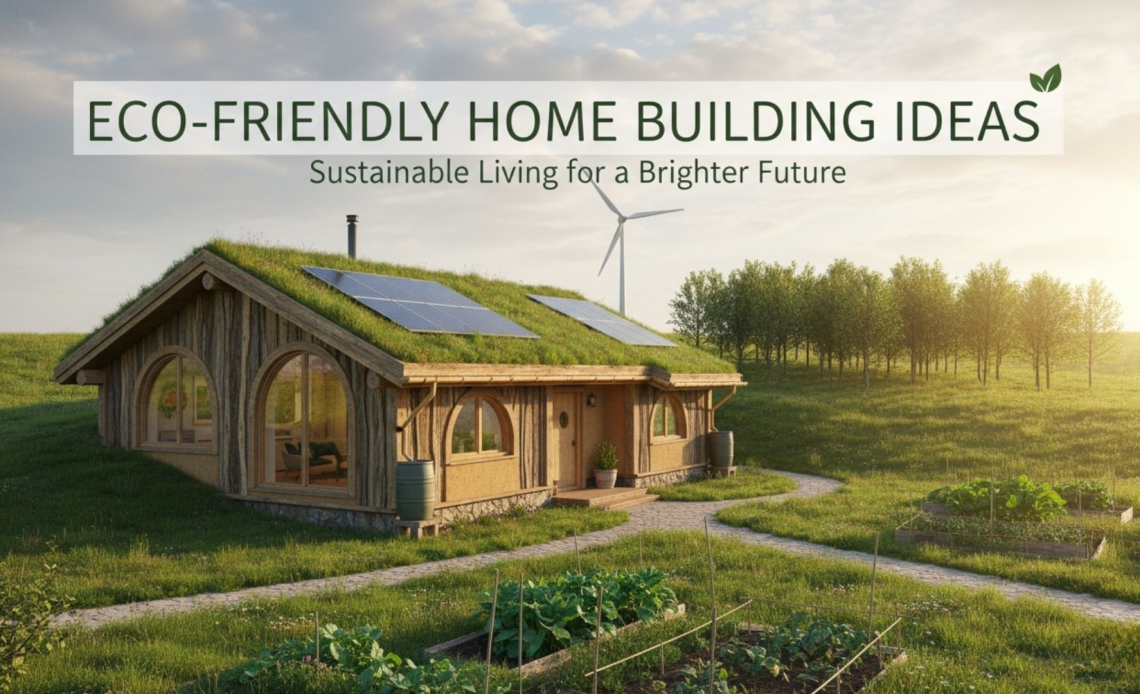
Designing an eco friendly home today is not about roughing it or living in a futuristic experiment.
It is about building a house that feels good to live in, is cheaper to run, and quietly cuts your footprint year after year.
In practice, that means thinking beyond trendy finishes and starting with choices that lock in comfort and efficiency for the next 30 years.
Here is how to weave sustainability into a modern home from the ground up.
Start With The Building Shell, Not The Gadgets
The most eco friendly homes get the basics right before they add technology.
Your shell walls, roof, windows and doors does more to control energy use than any single appliance.
Thicker insulation, continuous air sealing, quality windows and careful detailing around penetrations can slash heating and cooling demand.
The U.S. energy office has found that high performing homes with better envelopes and solar features may cost around 5 to 10 percent more to build than a similar home that just meets code, yet they usually cost less to own because energy bills are so much lower.
Work With The Sun
Good orientation is free performance. If your site allows, place the longest side of the house where it can capture winter sun and avoid harsh afternoon glare.
Group living spaces along that sunny side, then use deep overhangs, awnings or exterior shades so summer sun stays out while low winter sun still reaches inside.
Clerestory windows, light shelves and open interior layouts help daylight travel deeper into the home, which cuts the need for artificial lighting and makes spaces feel larger and calmer.
Tight, Then Right
Once the shell is designed, focus on tightness. A blower door test during construction can reveal leaks while they are still easy to fix.
When a home is well sealed, you can use smaller, more efficient heating and cooling systems without sacrificing comfort.
Add a balanced ventilation system with heat recovery so fresh air comes in without throwing away all the energy you just saved.
Read More: 10 Budget-friendly Home Decor Ideas That Look Luxury
Choose Smart, Low Impact Materials
Every material carries a story in terms of extraction, manufacturing and transport.
Swapping a few conventional products for better ones can significantly cut embodied carbon and improve indoor air.
Natural and rapidly renewable materials such as bamboo, cork and engineered wood can replace resource intensive flooring and wall systems in many designs.
Studies of sustainable materials highlight bamboo, hempcrete, cork and cross laminated timber as examples that pair strength with lower carbon footprints compared with standard concrete and steel.
Reclaimed and recycled options matter just as much. Salvaged beams, recycled steel and reclaimed hardwood flooring save both emissions and character.
Industry guides to eco friendly building materials place these reused options high on the list for reducing waste and embodied energy.
Inside, specify low or zero VOC paints, adhesives and sealants to keep indoor air quality healthy long after move in.
The new house smell is often just off gassing you do not need it to enjoy a fresh, modern interior.
Right Size The Home
One of the most powerful eco friendly decisions is also the least glamorous: keep the house a sensible size.
Smaller, well designed homes use less material, need smaller mechanical systems and consume less energy year after year.
Research on efficient housing markets shows that energy efficient homes often sell at a price premium even though they are modestly smaller in floor area than comparable conventional homes, because buyers value performance and quality over raw square footage.
Instead of adding extra rooms just in case, consider flexible spaces.
A guest room that doubles as an office, or a broad landing that can become a play zone, is easier on both budget and planet than another full wing you rarely use.
Upgrade Heating, Cooling And Hot Water
After the shell, mechanical systems drive most of your home’s ongoing energy use. Modern high efficiency equipment can slice that dramatically.
Air source heat pumps now provide efficient heating and cooling in a wide range of climates.
Paired with a tight envelope, they can replace separate furnace and air conditioner setups and work with smart thermostats to trim energy use further.
For hot water, heat pump water heaters use electricity to move heat rather than generate it directly, which can use far less energy than a typical electric tank.
Federal energy credits currently cover a portion of the installed cost of qualifying systems, with caps that can reach into the low thousands of dollars for heat pumps and other upgrades, subject to annual limits and deadlines in the tax code.
If you prefer gas for now, a well insulated, right sized condensing boiler or water heater can still be a big improvement over older models, especially when combined with smart controls and recirculation loops designed to minimize waste.
Read More: Minimalist Apartment Makeover Ideas on a Budget
Design The Home To Be Solar Ready
Even if you are not ready to install solar panels on day one, you can make future solar simple and inexpensive.
A clear roof plane without complicated hips and dormers, oriented for good sun exposure, is a strong start.
Running conduit from the electrical panel to the attic or roof location during construction costs very little and makes a later solar installation straightforward.
Analysis of zero energy homes shows that when design and technology are planned together, the extra cost to reach net zero can often land in the mid single digits as a percentage of total build cost, with the higher efficiency paying off over time through lower bills.
Battery storage is optional, but if you think you might add it later, locate your main service panel and mechanical room where they will be accessible and ventilated enough to accommodate future gear.
Treat Water As A Precious Resource
Eco friendly design is not only about kilowatt hours. Water is another critical piece. Choose efficient plumbing fixtures.
The EPA’s WaterSense program certifies faucets, showerheads and toilets that use at least about 20 percent less water than typical products while maintaining performance.
EPA WaterSense Labeled bathroom faucets, for example, can cut flow by 30 percent or more compared with standard fixtures, which adds up to thousands of gallons saved a year for a typical household.
Outside, swap thirsty turf for native or climate adapted plants and design irrigation carefully. Drip systems, mulched planting beds and rain sensors do more for a landscape than a blanket of lawn ever could.
If codes allow, add rainwater harvesting or at least route downspouts to planted areas rather than storm drains. You reduce runoff, support healthy soil and give your garden a free drink with every storm.
Use Smart Technology To Lock In Savings
Smart home features are not just toys when they are chosen with purpose.
Smart thermostats can learn your schedule and trim heating and cooling when you are asleep or away.
Connected lighting lets you create scenes and schedules that avoid waste without constant fiddling.
Leak sensors near water heaters, washing machines and sinks can catch a problem early and prevent both damage and wasted water.
Real time energy monitors that show how much power your home is using in dollars and watts can be surprisingly motivating.
Many homeowners find that simply seeing the spikes when the clothes dryer runs or multiple space heaters kick on changes their habits in a matter of weeks.
Make The Financials Work In Your Favor
Eco friendly homes are often perceived as expensive, but that gap has been shrinking quickly.
Recent market analyses find that building green now adds only a small percentage to upfront construction costs in many cases, often in the low single digits.
Certified and high performing buildings have been shown to deliver significantly lower operating costs.
One review linked new sustainable buildings with roughly 14 percent lower operating expenses compared with conventional ones, thanks to reduced energy and water use.
On top of that, federal tax credits for qualifying energy efficient upgrades, alongside state and utility programs, can offset a meaningful chunk of the initial investment in equipment such as heat pumps, upgraded insulation and solar.
Internal Revenue Service and related agencies currently administer credits that reimburse a percentage of project costs up to annual caps, although the exact rules and dates change over time, so it is wise to verify them before you build.
For many homeowners, the result is simple. A slightly higher mortgage payment is more than balanced by lower utility bills, creating positive cash flow from the first month in a home that is also quieter, healthier and more comfortable to live in.
Read More: Top Things to Consider When Buying a House: A Complete Guide for Smart Home Buyers
Conclusion
Eco friendly home building is not an all or nothing decision. You do not have to pursue every certification or cutting edge technology for the project to be worthwhile.
Start by prioritizing a smart shell and sensible home size. Layer in better materials, efficient systems and water wise fixtures.
Leave room in the design for future solar and other upgrades. Use incentives to stretch your budget while they are available.
Built this way, a modern home does more than shelter you. It becomes a quiet partner in lowering your bills, shrinking your footprint and creating everyday comfort that feels as good in ten years as it does on move in day.