
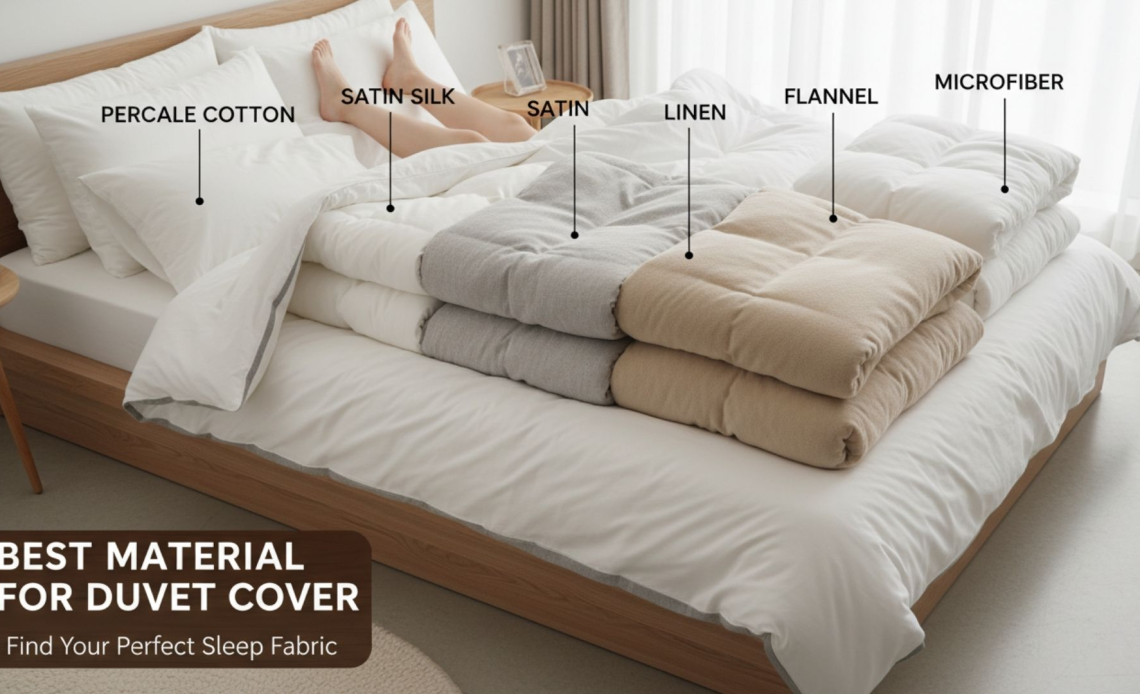
A duvet cover is one of the few textiles that touches your skin for hours every night. The wrong fabric can leave you hot, clammy, or constantly fighting with wrinkles and static.
The right one quietly does its job so well that you barely think about it. There is no single perfect material for every person or climate.
Each fabric brings a distinct feel, level of breathability, and maintenance routine.
The goal is to match the material to how you sleep, where you live, and how much effort you want to put into care.
Below is a practical guide to the major duvet cover materials, what they are good at, where they fall short, and how to decide which one belongs on your bed.
What Actually Matters In A Duvet Cover Material?
Before getting into specific fabrics, it helps to know what you are optimising for. Most people care about some mix of:
- Breathability and temperature regulation: How well the fabric lets heat and moisture escape. This matters especially for hot sleepers and humid climates. Natural fibres like cotton, linen, and bamboo based fabrics are generally more breathable than synthetics.
- Hand feel: Crisp and cool, buttery smooth, airy and textured, or plush and fuzzy. This is mostly personal preference.
- Durability: How the fabric holds up to frequent washing, friction, and sunlight. Long staple cottons and linen tend to age better than cheaper synthetics or short staple cotton.
- Care and maintenance: Whether you are happy to line dry, avoid high heat, or hand wash, or you want something that goes straight into the machine and comes out fine.
- Allergies and sensitivity: Natural fibres that breathe well and resist dust mites, like silk, linen, and some cottons, can be kinder to reactive skin.
- Budget and sustainability: Organic certifications, eco friendlier production, and premium fibres all add to cost, but they may also extend the life of your duvet cover.
With that in mind, let us look at the main options.
Read More: Bed Skirt Height And Buying Guide
Cotton Duvet Covers: The Reliable All-Rounder
Cotton is still the most popular bedding fabric worldwide for a reason. It is breathable, familiar, easy to wash, and available at every price point, from basic to hotel level luxury.
Two weave types really matter for cotton duvet covers: percale and sateen.
Percale Cotton: Cool, Crisp, And Breathable
Percale is a simple one over, one under plain weave that creates a matte, closely woven fabric with a crisp, cool feel.
How it feels and performs:
- Cool and lightweight on the skin, ideal if you run warm or live in a hot or humid climate.
- Breathes well and tends to dry a bit faster after washing.
- Has that classic “freshly made hotel bed” crunch at first, then softens over time.
What to know:
- Wrinkles more easily than sateen. If you want a perfectly smooth, glossy look straight from the dryer, percale may disappoint.
- Thread count around 200 to 300 in good quality long staple cotton is usually plenty. Higher numbers matter less than fibre quality and honest construction.
Percale is a great choice if you are a hot sleeper, live in a warm climate, or simply hate feeling smothered by your bedding.
Sateen Cotton: Smooth, Lustrous, And Slightly Warmer
Sateen uses a satin style weave where threads float over several others before going under one. This creates a denser, smoother surface with a subtle sheen.
How it feels and performs:
- Noticeably silkier and more drapey than percale.
- Has a gentle sheen that gives the bed a more polished, luxurious look.
- Feels slightly warmer and heavier, which many people like in cooler bedrooms or winter.
What to know:
- The denser weave can sleep a bit warmer than percale. If you overheat easily, it is worth pairing with a lighter duvet insert.
- Good sateen is usually made from long staple cotton (Egyptian, Pima, or Supima), which improves softness and durability but does increase cost.
Choose sateen if you like a silky, cozy feel, want a more wrinkle resistant look, and tend to feel chilly at night.
Read More: 10 Best Sleeper Sofas & Sofa Beds
Linen Duvet Covers: Airy, Textured, And Long Lasting
Linen is spun from the flax plant and has built a loyal following among hot sleepers and people who love a relaxed, lived in aesthetic.
How it feels and performs:
- Very breathable, with a looser weave that lets heat and moisture escape quickly.
- Naturally moisture wicking, which helps if you sweat at night.
- Starts slightly coarse but softens beautifully with each wash, all while retaining a distinctive slubby texture.
What to know:
- Often more expensive than cotton, partly because flax is more labour intensive to grow and process.
- Wrinkles and creases easily, but that is part of its charm. If you like a perfectly smooth bed, linen may look too casual.
- Extremely durable when properly cared for, often outlasting cotton in long term use.
Linen is an excellent choice for warm climates, non air conditioned homes, and anyone who prefers a quietly luxurious, natural look over shiny perfection.
Bamboo And Eucalyptus (Lyocell, Tencel): Cool And Silky
Many modern duvet covers use regenerated cellulose fibres like bamboo viscose or eucalyptus based lyocell (often sold as Tencel). These are made from plant pulp that is dissolved and spun into very fine, smooth fibres.
How they feel and perform:
- Very soft and fluid, with a cool hand that many people compare to silk.
- Naturally good at wicking moisture and can feel cooler and less clammy than cotton for sweaty sleepers.
- Often marketed as hypoallergenic and gentle on sensitive skin.
What to know:
- Quality varies significantly. Cheaper versions may pill, lose their sheen, or feel limp after repeated washing.
- Bamboo in particular has a complicated sustainability story. The plant is renewable, but many conventional viscose production methods rely on harsh chemicals. Lyocell made through closed loop processes can be a more environmentally careful alternative.
Choose bamboo or eucalyptus based covers if you want a very soft, cool fabric and you are happy to follow the care label carefully, often with lower wash temperatures and gentler detergents.
Silk Duvet Covers: Luxury For Skin And Hair
Pure silk duvet covers sit at the indulgent end of the spectrum. They are prized for their smoothness, subtle sheen, and beauty benefits.
How they feel and perform:
- Incredibly smooth against the skin and naturally temperature regulating. Silk tends to feel cool at first contact but quickly matches your body temperature without trapping heat.
- The glide of silk reduces friction on hair and skin, which is why people often notice fewer tangles and less bedhead and why silk is popular with those who get pillow creases or irritation.
- Naturally resistant to dust mites and often suitable for allergy prone sleepers.
What to know:
- Expensive compared with other options, especially at high momme weights.
- Requires more delicate care. Many silk covers are labelled for hand wash or very gentle machine cycles, and they dislike high heat and harsh detergents.
Silk is ideal if you want true luxury, have very sensitive skin, or are specifically trying to care for curly or fragile hair. For most households, it works best as a special duvet cover rather than an everyday, kid friendly option.
Read More:
Flannel And Jersey: Cozy Winter Heroes
Flannel and jersey cotton duvet covers are more niche but worth mentioning if you dread getting into a cold bed.
- Flannel is usually cotton that has been brushed to raise a fuzzy surface. The fibres trap warm air, which makes flannel covers feel instantly snug and well suited to cold climates or winter only use.
- Jersey is knit rather than woven, similar to a favourite T shirt. It feels stretchy and soft, with a casual look, and can be comfortable in cooler rooms if you like a cocooning feel.
Both tend to pill sooner than smooth weaves and can be too warm for hot sleepers or warm weather.
Microfiber And Polyester: Budget Friendly And Low Maintenance
Microfiber duvet covers are made from very fine synthetic fibres, usually polyester. They have become common in budget sets and kids rooms.
How they feel and perform:
- Soft and often brushed, which can feel cozy straight out of the package.
- Highly wrinkle resistant and quick drying, which makes them easy to care for.
- Typically cheaper than natural fibre options.
What to know:
- Less breathable than cotton, linen, or bamboo based fabrics. Microfiber can trap heat and moisture, which is uncomfortable for hot sleepers.
- More prone to static and may hold onto odours and body oils.
- Produced from petroleum based fibres, so they are not the most sustainable choice and can shed microplastics in the wash.
Microfiber works for guest rooms, kids beds, or tight budgets, but if comfort and breathability are top priorities, natural fibres are usually a better long term investment.
How To Choose The Best Material For Your Duvet Cover?
Once you understand the character of each fabric, choosing becomes much simpler. Think about three core questions.
Are You A Hot Or Cold Sleeper?
- If you frequently kick off the covers, wake up sweaty, or live in a warm climate, prioritise breathable fabrics like cotton percale, linen, or good quality bamboo or lyocell.
- If you are always reaching for an extra blanket, look at cotton sateen, brushed cotton, flannel, or even silk. Their denser or loftier structures hold more warmth.
How Much Maintenance Do You Tolerate?
- If you want wash, dry, and forget, mid range cotton percale or sateen is usually the safest option. Quality cotton can go through frequent warm washes without much drama.
- If you are willing to baby your bedding a little, linen, bamboo, and silk reward you with beautiful texture and feel, as long as you follow the care label.
What Is Your Budget And Sustainability Priority?
- For value, a well made cotton cover in decent long staple fibre often hits the sweet spot of comfort, durability, and cost.
- If you want to invest, look for organic or certified fabrics such as GOTS cotton, quality linen, or reputable lyocell producers that use closed loop processes and publish their environmental standards.
Read More: What Are The Mattress Sizes?
Conclusion
There is no single best duvet cover material that suits everyone.
Cotton remains the all rounder that works for most people most of the time, with percale and sateen offering very different personalities from the same fibre.
Linen shines in heat and humidity and rewards patience with serious longevity. Bamboo and lyocell feel cool and silky for those who prioritise softness and moisture control.
Silk delivers pure indulgence for skin and hair, while flannel, jersey, and microfiber fill specific niches for cold rooms or low budgets.
Start with your sleep habits and climate, then decide how much maintenance and cost you are comfortable with.
When you match the fabric to your real life, your duvet cover stops being just another textile on the bed and becomes a quiet upgrade to how well you rest.