
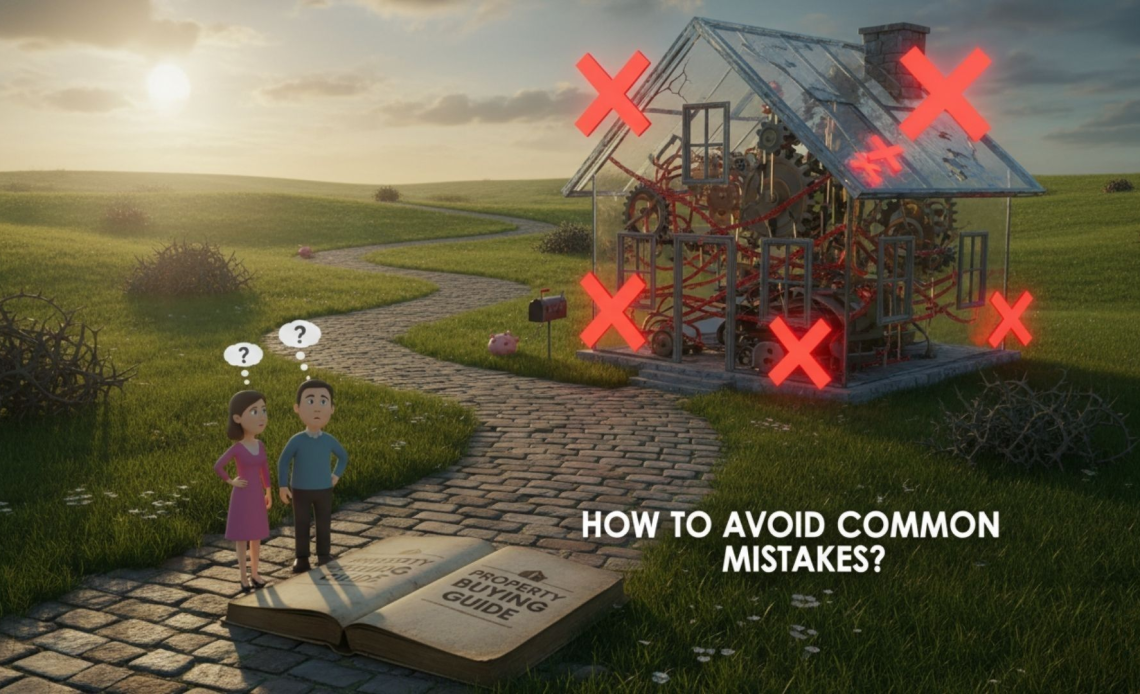
Buying a home is exciting. It is also one of the most complicated financial decisions you will ever make.
Between emotion, pressure from the market, and a stack of paperwork you barely understand, it is easy to make mistakes that cost thousands and lock you into the wrong property for years.
Most costly buying errors are predictable. If you know what to watch for, you can avoid them and walk into your new home with confidence instead of regret.
Below is a practical, real world guide to the mistakes buyers make most often and exactly how to sidestep them.
1. Know Your Real Budget Before You Fall In Love With A House
A surprisingly common mistake is starting the search with a price point instead of a full financial picture.
Buyers look at what similar homes cost, pick a number that feels reasonable, then work backward. That is how people end up house poor.
Start with your monthly cash flow, not the listing price.
Most lenders use a guideline that keeps housing costs at roughly a quarter of your gross income, and many still work with the 28/36 rule: no more than about 28 percent of your gross income on housing and around 36 percent on all debt combined.
Run the math on your own situation. Factor in:
- Mortgage principal and interest
- Property taxes
- Homeowners insurance
- Any mortgage insurance
- HOA or condo fees
Then stress test your budget. Ask yourself what happens if one income drops, daycare or medical costs rise, or you need to replace a car. A home that only works when every variable goes perfectly is not affordable.
Read More: Buying Property For The First Time: Complete Beginner Guide
Get Preapproved, Not Just Prequalified
Another early pitfall is shopping with only a “prequalification” from a lender, which is usually a quick estimate based on what you tell them.
A true preapproval requires a full application and document review, including your credit, income, and assets. It gives you a clearer limit and carries more weight with sellers.
Without that, you risk falling in love with homes that are out of reach or overextending because a casual estimate made your budget look bigger than it really is.
2. Looking Only At The Price Tag, Not The All-In Cost
Another classic mistake is focusing on the purchase price and mortgage payment while ignoring everything else that comes with ownership.
On top of your down payment, you will pay buyer closing costs, which typically land around 2 to 5 percent of the purchase price.
That covers lender fees, title charges, recording fees, prepaid taxes and insurance, and more.
On a 350,000 dollar home, that is roughly 7,000 to 17,500 dollars, and recent national averages sit near seven thousand dollars for many buyers.
Then add:
- Property taxes, which can easily add hundreds per month
- Homeowners insurance and, in some areas, separate flood or wind coverage
- HOA or condo dues
- Utilities that are higher than in a rental
- Moving costs and basic furnishings
The cost people overlook most is maintenance. A useful rule of thumb: set aside about 1 to 4 percent of your home’s value each year for repairs and upkeep.
That means 3,000 to 12,000 dollars a year on a 300,000 dollar property, especially as it ages.
If you do not budget for these items, you might still close on the home, but you will feel the squeeze later through credit card debt, deferred repairs, or the sense that you can never breathe financially.
3. Skipping Or Rushing The Home Inspection
In a hot market, buyers sometimes consider waiving the home inspection to make their offer more attractive or to save a few hundred dollars. That choice can easily turn into a five-figure mistake.
A good inspector can flag structural issues, roof problems, old or unsafe electrical work, aging plumbing, signs of water intrusion and mold, and past DIY shortcuts that were not done to code.
Hidden defects in just one of those categories can cost more than you saved on the inspection fee.
Even if you keep your inspection contingency, do not treat the report like a formality. Read it carefully, ask questions, and get estimates for any major items.
For older homes, consider additional inspections for sewer lines, foundations, or pests.
For condos and townhomes, look not just at your unit but also at the building’s common systems and reserve funds, because those affect your future special assessments and fees.
Read More: Top Things to Consider When Buying a House: A Complete Guide for Smart Home Buyers
4. Letting Emotion Drive The Decision
Most buyers walk into at least one home and think, This is it. The light is perfect, the kitchen is renovated, the backyard feels like vacation.
Emotion is unavoidable, but if it dominates your decision, it can steer you into the wrong property.
Common emotional traps include:
- Overlooking noise, traffic, or a difficult commute because the interior is stunning
- Ignoring poor natural light, awkward layout, or small bedrooms because you like the finishes
- Dismissing concerns about schools, amenities, or future resale value because you want the house now
Location, layout, and long term livability matter more than appliances and paint colors.
Finishes can be upgraded over time; a bad commute or a street that feels unsafe at night will wear you down.
Visit the neighborhood at different times of day. Talk to neighbors. Check how long similar homes stay on the market and what they resell for.
Future you will care a lot more about noise, parking, and local services than the color of the cabinets.
5. Waiving Protections You Do Not Fully Understand
To win a bidding war, buyers sometimes offer to waive contingencies like financing, appraisal, or inspection.
That can work for very strong buyers who fully understand the risk and have backup cash. For everyone else, it can be dangerous.
- A financing contingency lets you walk away or renegotiate if your loan is denied. Without it, you can lose your deposit if something changes in your credit or employment and the bank says no.
- An appraisal contingency protects you if the property appraises below the contract price. If it comes in low and you have no protection, you may need to bring extra cash to closing to cover the gap.
- An inspection contingency gives you leverage to request repairs, credits, or a price reduction if major issues are found.
Before waiving anything, talk through worst case scenarios with your agent and lender.
If you cannot comfortably cover a low appraisal or pay cash if financing falls through, do not give up those protections just to be competitive.
6. Not Shopping Around For Professionals
Many buyers work with the first lender and first agent they meet. Sometimes that works out. Other times it means leaving money and peace of mind on the table.
Mortgage rates and fees vary from one lender to another, even for the same borrower profile.
Comparing formal offers from at least three lenders can save thousands over the life of the loan through a slightly lower rate or reduced closing costs.
Similarly, take time to interview agents. Look for someone who:
- Knows your target neighborhoods well
- Can explain pricing, competition, and common red flags in plain language
- Is comfortable pushing back when you are about to overpay or take on too much risk
The right team will not just open doors. They will protect you from mistakes you do not even know to worry about yet.
7. Thinking Only About Getting In, Not About What Comes Next
A property is not just a roof over your head. It is also a long term financial commitment.
Another mistake is planning only for getting the keys instead of thinking through life for the next five to ten years.
Ask yourself:
- How long do you realistically expect to live here?
- Could you carry the home comfortably if you or a partner changed jobs, took time off, or started a family?
- How easy would it be to rent or resell this property if you had to move?
Recent research has shown that in many major cities, the upfront cash needed for a home, including the down payment and first year’s costs, can approach 1.6 to 2 times a typical buyer’s annual income.
That makes it even more important to think about flexibility, not just the moment of purchase.
A slightly smaller or less flashy home that gives you breathing room, options, and solid resale potential is almost always a better decision than the dream house that stretches you to your limit.
Read More: Property Manager Hiring Tips For Rental Owners
Conclusion
Most property buying mistakes have the same root cause: buyers focus on the home and the hurry, not the full process. They chase listings, fall in love, then try to make the numbers work.
Get your budget, loan options, and risk tolerance clear first. Price in closing costs, taxes, insurance, and ongoing maintenance, not just the down payment.
Treat inspections and contingencies as guardrails, not optional extras. And surround yourself with professionals who will tell you no when everyone else is saying you can stretch.
If you do those things, you will not avoid every surprise. Real estate always carries some uncertainty.
But you will dramatically reduce your odds of buying the wrong property for the wrong reasons and increase your chances of getting a home that fits your life, your wallet, and your long term plans.
