
Waterbeds have gone from 70s novelty to niche, quietly loved by people who like deep pressure relief and a warm, weightless feel.
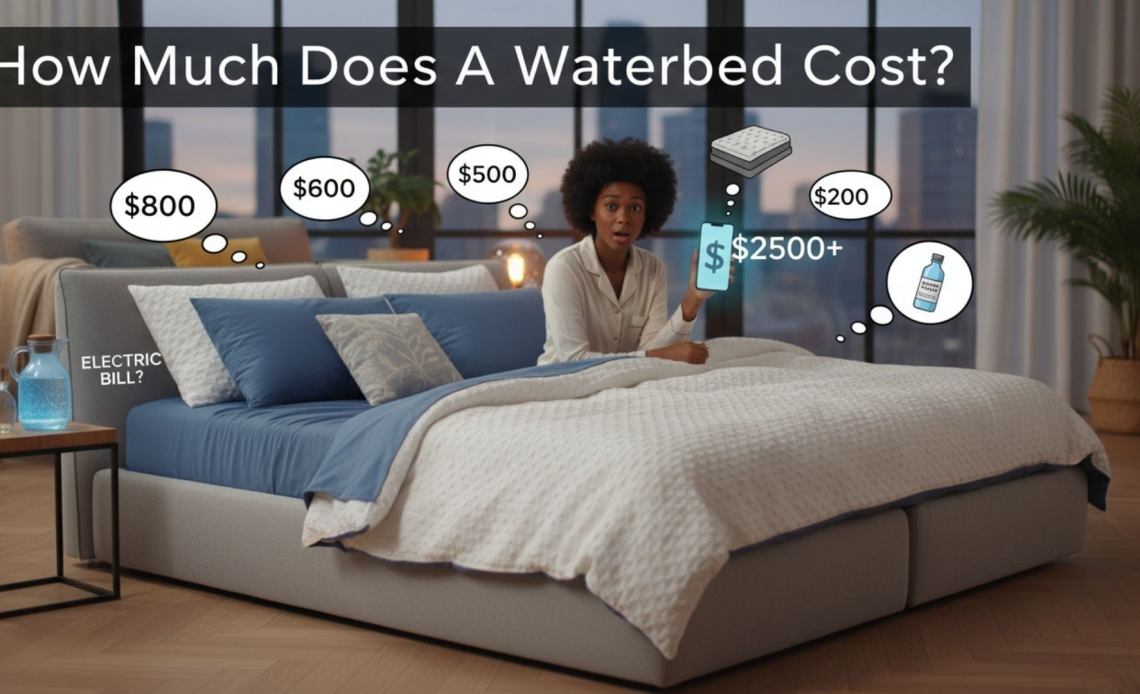
If you are curious about bringing one home today, the first real question is simple: how much does a waterbed actually cost?
Anywhere from the price of a basic air mattress to the cost of a premium traditional mattress.
The long answer depends on the type of waterbed, the setup you choose, and what it costs to heat and maintain it over time.
Typical waterbed price ranges
Recent price guides and retailer listings put most consumer waterbeds somewhere between about 50 and 2,000 US dollars, from bare-bones vinyl mattresses on the low end to full softside systems with designer frames at the top.
Here is what that usually means in practice:
- Basic vinyl waterbed mattress: often 50 to 150 dollars for a simple free-flow bladder with no frame or heater.
- Mid-range setups: usually 150 to 700 dollars for a hardside mattress, liner, and sometimes a basic heater kit, depending on size and motion control.
- Premium softside systems: typically 800 to 2,000 dollars or more for a bed that looks like a regular mattress, often with pillow top, high stability, digital heater and upholstered base. Some softside systems from brands like Sterling Sleep are listed from roughly 2,100 dollars upwards.
Medical or anti-bedsore waterbeds sit in a different bracket.
Simple PVC or rubber medical waterbeds aimed at pressure sore prevention are widely advertised between about 1,200 and 4,500 rupees per piece, a modest spend compared with a bedroom waterbed system.
All figures are ballpark numbers based on current online listings and may swing with currency, promotions, and local availability, but they give a realistic starting point.
Read More: Types Of Canopy Beds
What actually drives the price of a waterbed?
Several factors stack together to decide what you pay.
Type of waterbed
Traditional hardside beds have a rigid wooden frame that contains the vinyl bladder. They are usually cheaper for the mattress itself, but you either need an existing waterbed frame or have to buy one separately.
Softside beds hide the water system inside a foam and fabric enclosure, so the bed looks like a standard mattress.
The build is more complex, and prices climb accordingly, especially for deep-fill, heavily cushioned designs.
Medical waterbeds and overlays are usually just the water mattress without a decorative frame. That keeps hardware costs down.
Size
Just as with standard mattresses, moving from twin to queen to king and California king adds material and cost.
A king softside set usually sits near the upper end of any price band, especially when you add dual bladders or dual heaters for couples with different comfort preferences.
Motion level and construction
Free-flow or full wave waterbeds use a simple vinyl chamber that lets the water move a lot when you turn over. Waveless or motionless models add internal fiber baffles or foam to calm the movement.
More stabilization layers mean more material and more labor, which pushes the price up.
Online catalogs show that highly waveless hardside mattresses are routinely priced above simpler free-flow versions of the same size.
What is included in the package?
A bare vinyl bladder is the cheapest way into waterbeds, but it is not the whole story.
A complete bed can include:
- Mattress or bladders
- Safety liner
- Heater and control unit
- Foam rails (for softside)
- Foundation and platform or pedestal
- Decorative headboard or frame
Many high-end softside sets roll all of this into a single package. King size softside pillow-top systems that include heater, rails and fill kit are advertised in some markets at the equivalent of roughly 1,500 to 2,000 US dollars once currency conversion is considered.
Buying these items separately can be cheaper upfront but takes more work and usually means sacrificing some aesthetics.
Frame and furniture
If you choose a hardside bed and do not already have a frame, expect the furniture to be a major line item.
Solid wood hardside frames with bookcase or storage pedestals are often listed in ranges that run from just under 1,000 dollars to well over 3,000 dollars, depending on size and design.
Softside beds, by contrast, can often sit on a regular platform or box-spring style base, which widens your options and lets you reuse existing bedroom furniture.
Read More: Size Of A Bunk Bed
Cost by waterbed type
Basic vinyl mattresses and medical waterbeds
If you want to experiment without refitting an entire bedroom, a standalone vinyl mattress is the cheapest route.
Entry-level free-flow hardside bladders for standard waterbed frames show up online from around 50 to 150 dollars, depending on size and brand.
Medical waterbeds and anti-bedsore models are usually priced even lower, because they are narrow and designed to sit on an existing hospital or homecare bed frame.
Medical waterbeds commonly fall in the 1,200 to 3,000 rupee range per unit, with some “comfort” versions around 4,500 rupees.
These options give you the feel of water support, but you still need a suitable base and, for bedroom use, probably a heater.
Hardside waterbed for the bedroom
A typical spending pattern for a hardside bed looks like this:
- Mattress only: roughly 100 to 400 dollars, from simpler free-flow to highly waveless bladders, in queen or king sizes.
- Heater kit: a quality 300 watt heater from a brand such as InnoMax or similar is often around 150 to 200 dollars at current sale prices.
- Frame or pedestal: from a few hundred dollars for simple unfinished pine to several thousand for solid oak bookcase designs.
If you already own the frame, you can often have a comfortable hardside bedroom waterbed for somewhere in the mid-hundreds of dollars by replacing only the bladder, liner and heater.
Softside waterbed systems
Softside beds are where the price can start to look like a premium hybrid or latex mattress.
A queen or king softside mattress with mid-fill or deep-fill design, waveless support, and cover is commonly listed around the high hundreds of dollars even before you add a matching foundation.
Some queen softside mattresses with quilted covers and waveless bladders appear online near the 900-dollar mark.
When you move to full systems with:
- Pillow-top or Euro-top style quilting
- Dual bladders and dual digital heaters
- Upholstered base and coordinated headboard
prices in current catalogues frequently sit between roughly 1,500 and 2,500 dollars, with certain designer softside systems advertised at base prices just over 2,100 dollars before options.
For many buyers, that puts a softside waterbed directly alongside higher-end conventional mattresses.
What does it cost to run a waterbed?
Sticker price is only part of the story. Because most people like their waterbed warm, you also need to think about electricity.
Heater power and yearly energy use
A typical waterbed heater for a full-size hardside mattress is rated around 300 watts, with some designs and deeper beds using heaters up to about 400 watts.
The heater does not draw full power all the time; it cycles to hold a constant temperature.
Real-world measurements suggest that a heated waterbed often uses somewhere in the region of 300 to 1,500 kilowatt hours of electricity per year, which works out to about 36 to 180 dollars annually at a US energy price of 12 cents per kilowatt hour.
One energy calculator focused specifically on waterbed heaters estimates a typical use case at about 75 kilowatt hours per month, or just under 8 dollars on average US residential rates.
In practice, your bill depends on:
- Local electricity rate
- Bed size and insulation
- How warm you keep the water
- Room temperature and whether you use a comforter
Other ongoing costs
Beyond energy, expect a few small recurring expenses:
- Water conditioner: bottled conditioner that controls algae and preserves vinyl usually costs a modest amount once or twice per year.
- Patching and liners: occasional patch kits and, every so often, a new safety liner are inexpensive compared with the mattress itself but worth factoring in.
- Bedding: deep-pocket sheets and mattress pads sized for waterbeds can cost a little more than generic sets, especially in king and California king.
Read More: How To Inflate an Air Bed?
How to get the best value from a waterbed?
If you decide a waterbed fits your budget, a few choices help stretch your money.
Reuse furniture where possible. A softside mattress that fits your existing platform base saves hundreds on a new frame.
Spend on the heater and liner. Reliable temperature control and a quality safety liner protect both comfort and your floor, and they are relatively small costs compared with replacing a mattress or repairing water damage.
Match motion level to your needs. If you are happy with gentle waves, you do not need the most heavily baffled, expensive bladder. If you share the bed or have back issues, paying extra for a stable, well-designed waveless system is usually worth it.
Watch your energy habits. Using a thick mattress pad, keeping the bed covered when not in use and avoiding extreme water temperatures cuts your running costs without sacrificing comfort.
Conclusion
So how much does a waterbed cost? The honest answer is that it can be surprisingly affordable or comfortably premium, depending on what you want.
A simple vinyl mattress and heater can give you that floating, pressure-free feel for only a few hundred dollars if you already have a frame.
A full hardside bedroom setup or a sleek softside system that looks like a designer bed can run into the low thousands, roughly on par with quality hybrid and latex mattresses.
Once you add in a modest electricity cost to keep the water warm and small maintenance items over time, a well chosen waterbed sits in the same financial ballpark as other long-lasting sleep systems.
The difference is not just what you pay, but what you get in return: that distinct, softly buoyant feel that only a bed full of warm water can deliver.
