
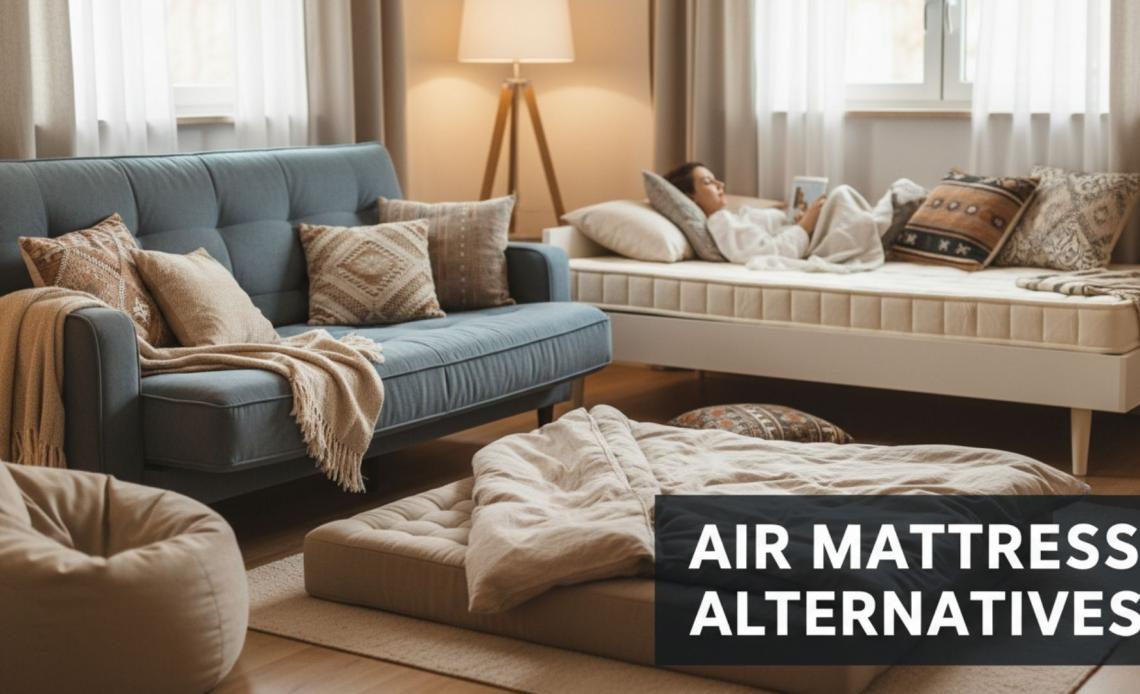
If you have ever spent a night on a sagging, squeaky air mattress, you know it is more make do than luxury guest experience.
Air beds are compact and convenient, but they can leak, deflate in the middle of the night, and leave guests waking up stiff and tired instead of rested.
The good news: you do not need a spare bedroom or a full size bed to offer a genuinely comfortable place to sleep.
Several smart alternatives feel closer to a real mattress while still folding, rolling, or tucking away when you do not need them.
Some work best for home guests, others shine for camping and travel, and a few can even double as everyday beds in small spaces.
We will walk through the most comfortable air mattress alternatives, when to use each one, and how to choose the right setup for your home and lifestyle.
Why Air Mattresses Often Feel Uncomfortable?
Air beds seem clever in theory. You inflate them when needed, dial in the firmness, then pack them down to a small box once guests leave. In practice, several little details add up to a less than restful night.
Air naturally changes volume with temperature. As the room cools overnight, the mattress can slowly soften, so your guest wakes up feeling like they are in a shallow ditch instead of on a flat surface.
Many people report having to top up the air if they want the bed to feel supportive for more than a night or two.
Support is also uneven. Pressure is distributed through the air chambers rather than through springs or foam.
Hips and shoulders often sink more than the lower back, which can leave the spine slightly out of alignment.
Add in the plasticky surface, squeaky movement, and the chill that creeps up from an uninsulated air pocket, and even a high quality air mattress can feel more like tolerable camping gear than a real bed.
This is why so many people look for alternatives that use foam, fiber, or springs instead of air. These materials tend to give more predictable support, better pressure relief, and fewer surprises at three in the morning.
Read More: Queen Air Mattress Dimensions And Guide
Comfortable Air Mattress Alternatives
Folding Floor Mattress (Tri Fold or Rollable)
A folding foam mattress is one of the simplest upgrades you can make from an air bed. These are usually made from a block of high density foam, cut into panels that fold on top of each other like a stack of cushions.
Because the core is solid foam, the feel is more consistent from edge to edge, with no sagging corners or air pockets.
A medium firm folding mattress can feel surprisingly close to a regular bed, especially in twin or full sizes.
Unlike a big guest bed, it folds into a compact cube that can slide into a closet or under a sofa, and many models come with a storage bag so you can stand them upright without collecting dust.
This option is ideal if you have guests a few times a year and want a predictable, no fuss sleep surface that sets directly on the floor.
Rollaway or Folding Guest Bed
If you want real bed comfort that still tucks away, a rollaway bed is worth considering. These frames fold in half and wheel into a closet, yet they support a proper foam or spring mattress.
Independent testers who compare portable beds consistently note that the better rollaway models feel more supportive than air mattresses, with less motion transfer and better edge support.
Many use steel frames and slat or mesh bases that hold the mattress up evenly, which helps guests maintain neutral spine alignment.
They do take more storage space than a tri fold mattress, but if you regularly host adults or older family members who need reliable back support, a rollaway is one of the closest options to a traditional bed.
Futon or Sofa Bed
Modern futons and sofa beds have come a long way from thin, lumpy mattresses. At their best, they give you two pieces of furniture in one: seating by day, a guest bed at night.
For sleeping, look for a futon or sofa bed with a thicker, dense mattress core rather than a very thin pad.
Many people prefer medium firm futon mattresses because they avoid that hammock feeling and can support the spine more evenly, which may help reduce morning aches for some sleepers.
Sofa beds with pull out platforms and separate mattresses tend to feel closer to a standard bed than click-clack styles where you sleep directly on the cushions.
The trade off is higher cost and more weight, so they work best if you want an everyday sofa that also handles overnight guests.
Shikibuton Style Floor Mattress
If you are open to sleeping close to the ground, a traditional style floor futon, often called a shikibuton, is a space saving and surprisingly comfortable option.
These are relatively thin mattresses, typically 2 to 4 inches thick, filled with cotton or other fibers, meant to be placed directly on the floor or on a firm mat.
Because they are firm and flat, they can help keep the spine more neutral for some sleepers, which may reduce tossing and turning.
Several sleep and wellness sources highlight potential benefits such as improved posture, better circulation, and less overheating, although comfort is always individual and people with specific back or joint issues should speak with a clinician before changing sleep setups.
Shikibutons are also very easy to store. You can roll them up in the morning, stand them in a closet, and reclaim your floor space.
That makes them perfect for studio apartments, multipurpose home offices, or kids rooms that double as guest spaces.
Mattress Topper on a Firm Base
If your main complaint about an air mattress is pressure points and stiffness, a thick mattress topper on a firm base can be a simple solution.
Guests can sleep on a 3 to 4 inch memory foam or latex topper laid over a dense rug, exercise mat, or folded blanket stack to soften the feel.
For short stays, some people find that a quality topper alone is enough cushioning, especially if they normally prefer a slightly firmer bed.
It is flexible, easy to roll, and can also revive a tired sofa bed or futon by masking lumps and seams.
Sleeper Chairs and Modular Floor Cushions
If you often host one guest at a time, a convertible sleeper chair can be a clever alternative. These start as oversized armchairs or loungers, then unfold into a narrow bed with foam cushions arranged in a line.
Modular floor cushion sets work in a similar way. Several brands sell stackable cushions that can be used as low seating, then rearranged into a flat sleeping surface.
This type of furniture is best suited to younger or more flexible guests, but it creates a casual, adaptable space and looks more permanent and polished than dragging out an air mattress.
Read More: How To Raise An Air Mattress Off The Floor?
Alternatives For Camping And Travel
Not all air mattress alternatives live indoors. If you mostly use an air bed for camping or sleepovers away from home, the best options look a little different.
Camping Cot With Pad
A camping cot lifts you off the ground, which makes a huge difference in warmth and comfort. Cots use a fabric or mesh surface stretched over a folding frame, paired with a thin foam or inflatable pad for cushioning.
Compared with a bare air mattress on the tent floor, a cot and pad combination can feel more supportive, stay more level as temperatures change, and keep you away from damp ground.
Many camping guides list cots alongside air beds as primary sleep systems for car camping, especially for adults who struggle to get up from ground level.
Foam or Self Inflating Sleeping Pad
For hikers and minimalist travelers, a compact sleeping pad is usually more practical than a large air bed. Modern pads use closed cell foam, air, or a mix of both to balance insulation, weight, and comfort.
Higher quality pads are designed to resist punctures, reduce noise, and provide enough cushioning for side sleepers while also offering thermal insulation rated with an R value.
Many outdoor testers now rank these pads as more comfortable overall than traditional camping air mattresses, particularly when you match pad thickness and R value to your camping season.
Hammock Setup
In mild climates and dry weather, a hammock system can be a very comfortable replacement for an air bed, especially for solo campers.
With the right angle and a diagonal sleeping position, you can lie relatively flat and relieve pressure from hips and shoulders.
For true comfort, you need an underquilt or insulated pad beneath you to prevent heat loss from below, plus a bug net and tarp in most environments.
Hammocks are not for everyone, but for people who enjoy the gentle rocking and do not mind a bit of setup, they can feel far more relaxing than balancing on an air mattress that shifts every time you move.
How To Choose The Right Option For You?
Think About How Often You Host
If you bring out extra sleeping space every few weeks, comfort should be a top priority. A rollaway bed, solid futon, or thick folding mattress will be kinder to your guests than an air mattress in regular rotation.
If you only have visitors once or twice a year, a tri fold mattress or floor futon that stores easily may be enough.
Consider Space and Storage
Measure your closet, under bed, or corner storage space before choosing. Rollaway beds and sofa beds take more room but feel most like real beds.
Folding mattresses and shikibutons offer a good balance of comfort and compact storage for small apartments and multifunctional rooms.
Factor In Back and Joint Needs
For guests with back or joint issues, aim for stable, medium firm support and avoid setups that sag.
A decent rollaway, a quality futon mattress, or a firm floor futon with a soft topper tends to work better than a bouncy, shifting air bed.
When in doubt, choose options with denser foam or springs and keep very soft, thin pads for children or very occasional use.
Balance Budget and Durability
Air mattresses are usually cheap to buy but can fail quickly thanks to punctures or seam leaks. Foam based options often cost more upfront but can last many years if used and stored correctly.
Look for washable covers, quality stitching, and materials that bounce back after compression.
If you camp and host at home, a good folding mattress and a separate camping pad or cot can cover both needs without doubling your budget.
Read More: Why Do Airbeds Lose Air Overnight? (Reasons and Fixes)
Conclusion
An air mattress will always win on compact storage and speed, but it rarely wins on comfort. If you want your guests to wake up rested, not grumpy and stiff, it is worth upgrading.
For home use, folding foam mattresses, rollaway beds, futons, and shikibuton style floor beds all offer more reliable support and a sleep experience closer to a real mattress.
For camping and travel, cots, insulated pads, and well planned hammock setups usually beat a basic air bed for warmth and stability.
Think about how often you host, how much space you can dedicate, and what your guests actually need. With a little planning, you can retire the squeaky air mattress and still be ready for visitors anytime.
