
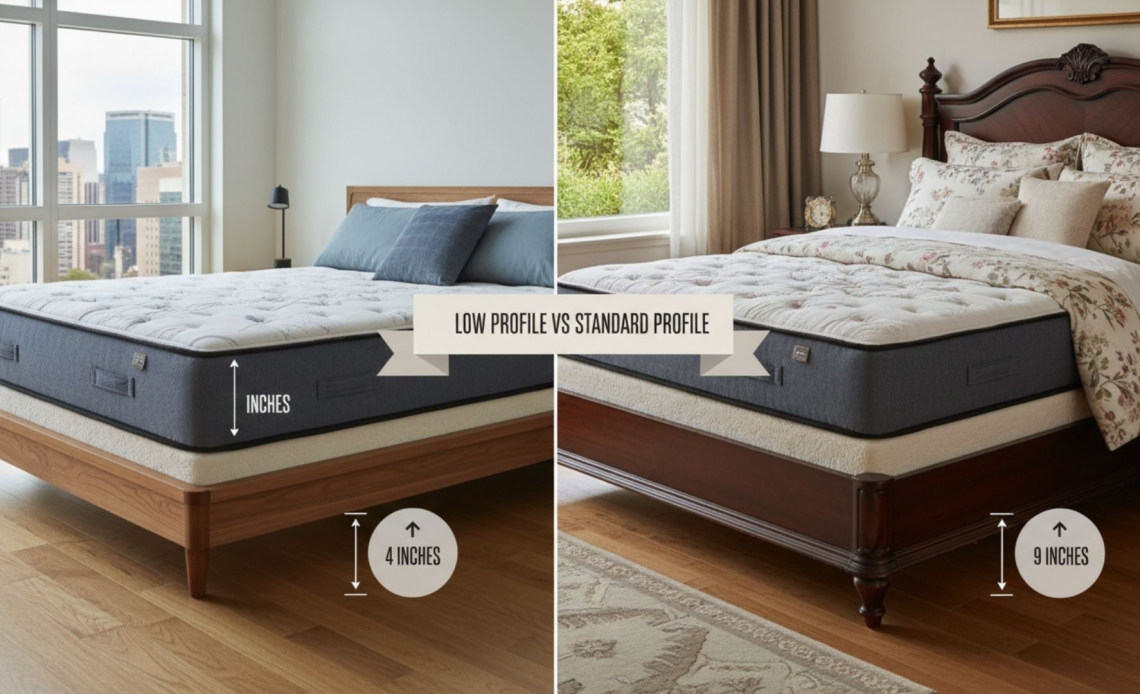
Choosing between a low profile and a standard profile box spring seems like a tiny decision, right up until your bed ends up too tall to climb into comfortably or so low it feels like sleeping on the floor.
Bed height changes how your bedroom looks, how easy it is to get up in the morning, and how well your mattress performs over time.
This guide walks you through the real differences between low profile and standard box springs, how each affects comfort and style, and how to decide what makes sense in your room, with your mattress, for your body.
What a Box Spring Really Does?
A box spring is not just a random box under your mattress. It is a supportive base that works with the mattress to do a few important jobs.
Inside that fabric covered shell is usually a wooden or metal frame with springs or a grid structure.
The box spring helps spread weight more evenly across the mattress, absorbs some of the movement when you turn over, and keeps the mattress off the floor so air can circulate underneath.
That airflow helps moisture escape and reduces the chances of mold or mildew. It also raises the bed to a more comfortable height so you are not crouching to sit down.
In older innerspring mattresses, the box spring was almost essential because the mattress coils needed a shock absorber underneath.
Many hybrid and foam mattresses are designed to sit on solid or slatted foundations, but box springs are still common with traditional metal frames and in many bedroom setups.
Low Profile vs Standard Profile
At a basic level, the difference is height.
Standard profile box springs are generally about 8 to 9 inches tall. Low profile box springs are shorter, usually around 4 to 6 inches tall. Some ultra low options and bunkie boards drop that even further to about 1 to 2 inches.
A few things stay the same between the two. Both are designed to support the mattress and absorb shock. Both can be built with similar internal structures.
The feel of the mattress on top does not change dramatically just because the box spring is shorter. What changes is the overall bed height and the visual weight of the bed in the room.
Low profile models often weigh less, so they are easier to move, rotate, or carry up stairs on your own.
Standard profile versions are bulkier and heavier, which can give the bed a more planted, traditional feel but can be a pain on moving day.
Read More: What Is A Sleigh Bed? Everything You Should Know
How Bed Height Changes Comfort and Safety?
Total bed height is the sum of your frame or base, the box spring or foundation, and the mattress. That final number matters more than many people think.
Most beds land somewhere between about 18 and 25 inches from the floor to the top of the mattress. Many standard beds that use a box spring hover around 25 inches.
Designers and sleep experts often suggest using your own body as the guide: when you sit on the edge of the bed, your feet should rest flat on the floor and your knees should be close to a right angle.
If your feet dangle, the bed is probably too high. If your knees sit higher than your hips, the bed is likely too low.
That small ergonomic detail has a big impact if you have joint pain, mobility issues, or are helping children or older adults in and out of bed.
A bed that is too high increases fall risk. A bed that is too low can make standing up much harder on knees and hips.
Because mattresses have been getting thicker, especially in luxury and hybrid categories, many people discover that a standard box spring suddenly pushes their bed height into the 28 to 30 inch range or higher.
That is where a low profile box spring becomes useful. It trims a few inches from the total height without forcing you to give up the mattress you like.
When a Low Profile Box Spring Makes Sense?
Thick modern mattresses and tall sleepers
If your mattress is already quite tall, a standard box spring can make the bed feel towering.
A typical frame plus a 12 inch mattress plus a 9 inch standard box spring can easily push the top of the mattress close to or above 30 inches.
Swapping in a 5 inch low profile box spring might drop that height by about 4 inches, moving the bed back into a more comfortable range for many people.
Low profile box springs are also useful if you share a bed and one partner is shorter.
Instead of forcing the shorter person to hop down every morning, a shorter foundation can bring the mattress closer to a shared sweet spot.
Children, shorter adults, and pets
Children, shorter adults, and anyone with limited mobility usually find lower beds easier to use.
A low profile foundation can bring the bed closer to knee level, which makes sitting, swinging legs up, and standing back up much more controlled and less tiring.
If you have pets that regularly jump on and off the bed, a slightly lower height can also reduce strain on their joints, especially as they age.
Small rooms, low ceilings, and modern style
Visually, a low profile box spring creates a sleeker, more contemporary line. In rooms with low ceilings, a very tall bed can dominate the space and make the ceiling feel lower.
Reducing the bed height helps the room feel more open and less crowded.
A shorter foundation also lets more of a tall upholstered or statement headboard show above the mattress, which is often the look people want with modern beds.
When a low profile box spring might not suit you
If your bed frame already sits low and your mattress is not especially thick, a low profile box spring can drop the bed to the point where you feel like you are crouching to sit down.
Very active sleepers or heavier couples may also prefer the extra mass and stability of a standard profile base.
Read More: Best 8 Sofa Bed Mattresses
When a Standard Profile Box Spring Is the Better Pick
A tall, classic bed look
If you like a high, traditional bed that you slide onto rather than down into, a standard profile box spring supports that look.
It creates a more formal presence, especially with traditional frames, four posters, or ornate headboards. That extra height can also make storage under the bed more useful.
Extra support and airflow
Standard profile box springs often have a deeper interior cavity, which means more air volume under the mattress.
That can help with airflow around older innerspring mattresses or warm sleepers who prefer a more breathable setup.
Some sleepers also feel that a taller, heavier box spring gives them more stability and support, especially with older metal frames.
Short frames and very low platforms
If your bed frame is unusually low, a standard box spring can bring the bed up into a more comfortable height range without changing the frame.
This can be a smart solution when you love the frame but the bed feels too low for everyday use.
When a standard profile box spring can cause problems
That extra height is not always a gift. Standard box springs can make beds uncomfortably tall for shorter people, children, or anyone with balance or mobility concerns.
In small rooms, a very high bed can visually shrink the space. And if you already own a thick pillow top or hybrid mattress, a standard box spring may push your bed height beyond the ideal comfort range.
Match the Box Spring to Your Mattress and Frame
Before you pick a low or standard profile, think about what is above and below it.
Many modern memory foam and hybrid mattresses are designed to work on rigid platforms or closely spaced slats rather than traditional bouncy box springs.
In fact, some manufacturers warn that using a springy, flexible box spring underneath a foam mattress can shorten its life or even void the warranty, which is why they recommend slatted foundations, platform beds, or designed foundations instead.
That does not mean you can never put foam on a box spring, but you need to check the mattress warranty and make sure the box spring is firm and supportive, not sagging or overly flexible.
Your bed frame matters just as much. A simple metal frame that only supports the edges usually needs a box spring of some kind, low or standard, to give the mattress a proper surface.
A sturdy platform or slatted frame with slats spaced closely can often support the mattress directly, which makes the low vs standard decision irrelevant because you may not need a box spring at all.
Read More: Platform Bed Vs Box Spring: Which is better?
How to Decide in Five Minutes?
You can get to a clear answer quickly with a tape measure and a few simple checks.
Measure the current distance from the floor to the top of your mattress. If you are already somewhere between about 18 and 25 inches and the bed feels comfortable to get in and out of, treat that height as your target.
Then add up the components of the bed you want. If your frame is 7 inches tall and your mattress is 12 inches thick, a 9 inch standard box spring would give you a total height of roughly 28 inches.
A 5 inch low profile box spring would land around 24 inches instead. That simple comparison tells you which way to go for a comfortable height.
Consider who is using the bed. Shorter adults, children, and anyone with joint pain or mobility issues usually do better with a lower total height.
Taller adults, especially those over about 6 feet, often prefer a slightly higher bed that they can slide onto without bending as much.
Look at your room. If your bed already dominates the space or sits high compared to your nightstands, a low profile box spring can bring everything back into proportion.
If the bed looks and feels stubby and you want a more luxurious hotel feel, a standard profile box spring will help.
Conclusion
A low profile box spring and a standard box spring do the same job but create very different experiences.
Standard profile models lift the bed higher, feel more traditional, and can make sense with low frames and thinner mattresses.
Low profile versions trim height, lighten the visual weight of the bed, and often suit thicker modern mattresses, smaller rooms, and sleepers who prefer easier access.
There is no single right answer. The best choice is the one that gives you a comfortable bed height for your body, works with your mattress warranty, and fits the style and scale of your room.
Measure what you have, think about how you move, and let those numbers decide whether low profile or standard profile is the smarter foundation for your sleep.
