
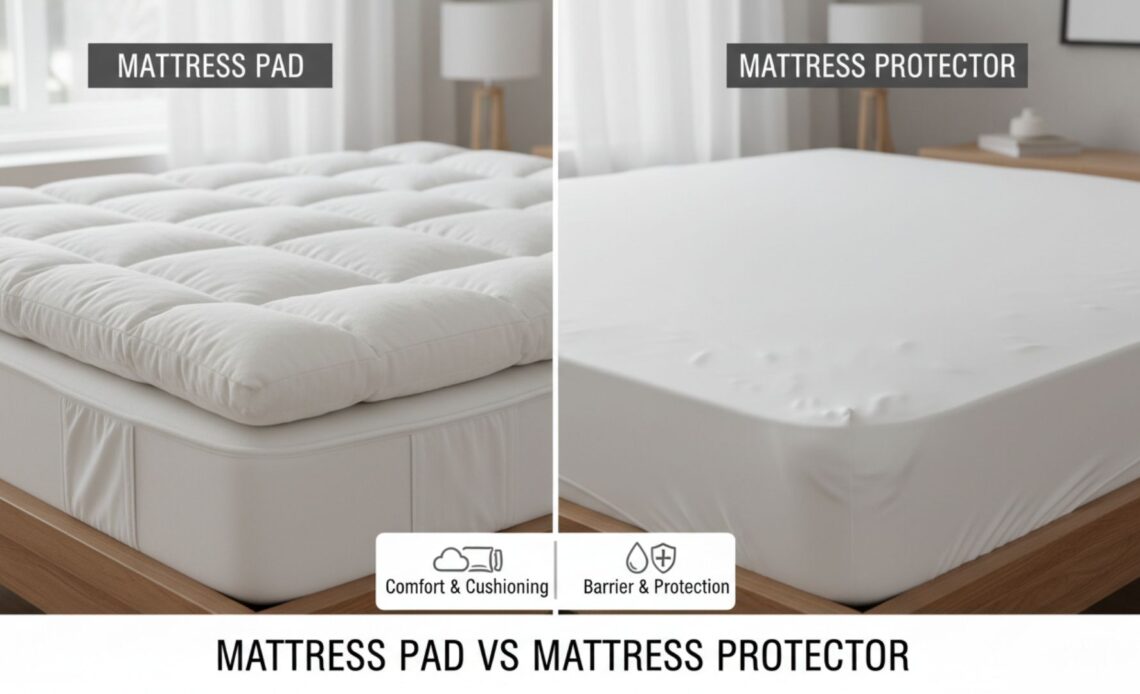
A good mattress is a big investment, and most of us want it to stay comfortable and clean for as long as possible.
That is where mattress pads and mattress protectors enter the picture. They sound similar, and they often live under the same fitted sheet, but they do very different jobs.
If you are wondering whether you actually need both or if one is enough, this guide will walk you through the differences in feel, protection, cost, and real life use cases so you can choose confidently.
What Is a Mattress Pad?
A mattress pad is a layer of cushioning that sits on top of your mattress and under your fitted sheet. Its main role is to change how your bed feels, usually by adding softness or a bit of extra support.
Most pads are quilted and filled with fiber, foam, latex, wool, or down alternative, and they are often about an inch or so thick.
You will usually find mattress pads in one of two constructions:
- Fitted style, with a stretchy skirt that grips around the sides of the mattress
- Anchor band style, with elastic straps at the corners
Both styles are designed to stay in place while you sleep and to be easy to remove for washing.
Benefits of a Mattress Pad
A mattress pad makes the most difference in comfort. If your mattress feels a bit too firm or flat, a pad can add a cushioned, more forgiving surface without the bulk and cost of a full topper.
It is also useful if your mattress is still structurally sound but has lost a little of its original plushness.
Because a pad adds a soft buffer between you and the mattress, it can:
- Make a budget mattress feel more luxurious
- Ease pressure on shoulders and hips for side sleepers
- Smooth out small surface imperfections
Some mattress pads also offer a light level of protection from wear and surface dust simply because they create an extra layer between you and the mattress.
Read More: Is It Safe To Spray Alcohol On Mattress?
Limitations of a Mattress Pad
Most traditional mattress pads are not designed as serious protection products. They may absorb small spills, but liquid can still soak through into the mattress, especially if there is no waterproof backing.
Pads also rarely offer a full barrier against dust mites, pet dander, or bed bugs, since they typically do not fully encase the mattress.
If protection is your main goal, a pad on its own is usually not enough.
What Is a Mattress Protector?
A mattress protector is a thin, often waterproof layer whose primary job is to safeguard your mattress from spills, sweat, stains, dust, and allergens.
Unlike a pad, a good protector is designed so you barely feel it while you sleep, or notice only a very slight change in feel.
Most protectors use a fabric top layer, such as cotton, polyester, or a bamboo blend, paired with a water resistant or waterproof backing.
They come in two main designs:
- Fitted protector, which covers the top and sides like a deep fitted sheet
- Zippered encasement, which surrounds the mattress on all sides and zips closed
Zippered encasements offer the most complete coverage and are often recommended in situations where bed bug, dust mite, or severe allergy protection is important.
Waterproof vs Water Resistant
Not every protector is fully waterproof. Some are water resistant, which means they can repel small spills and sweat but may not stop a large accident or a long standing spill from soaking through.
Waterproof protectors have a barrier layer that blocks liquid entirely when used correctly, though they can feel slightly warmer if the materials do not breathe well.
Benefits of a Mattress Protector
A quality mattress protector offers three big advantages.
First, it shields your mattress from liquid damage. Sweat, spilled drinks, bedwetting, pet accidents, or even a leaking hot water bottle can permanently stain a mattress and may void many mattress warranties.
A protector takes the hit instead of the mattress.
Second, it supports better hygiene. Over time, every mattress collects dead skin cells, body oils, dust, and microscopic debris.
A removable, washable protector stops most of that from reaching the mattress core and lets you clean the barrier in a normal laundry cycle.
Third, it can help allergy sufferers. By limiting the buildup of dust mites and other allergens in the mattress, protectors and encasements support a cleaner sleep environment, especially when washed regularly in hot water if the care label allows it.
Read More: How To Raise An Air Mattress Off The Floor?
Limitations of a Mattress Protector
Because mattress protectors are designed to be thin, they do not significantly change how your mattress feels.
If your mattress is too hard or too worn out, a protector will not fix that.
Some low quality waterproof protectors can be noisy or trap heat, although many modern designs use softer fabrics and breathable membranes to minimize this.
Encasements are also more work to put on and take off, so they tend to be used in specific situations like rentals, guest rooms, or homes where bed bugs or severe allergies are a concern.
Mattress Pad vs Mattress Protector: Key Differences
Although both sit on your mattress and often look similar at a glance, the differences between a pad and a protector are clear once you focus on their job descriptions.
Purpose
- Mattress pad: Built for comfort first. It tweaks the feel of your mattress by adding cushioning or subtle support, with light protection as a side effect.
- Mattress protector: Built for protection first. It acts as a barrier against moisture, stains, and allergens while trying not to change the feel of the bed.
Feel and Thickness
Most mattress pads are thicker and quilted, so you can usually feel the added plushness when you lie down.
Protectors are much thinner and are designed to be as close to invisible as possible once you put a sheet on top.
Protection Level
A standard pad provides only mild protection. It may slow down a spill, but unless it has a waterproof backing, liquid can still reach the mattress.
A protector, especially a waterproof one, is specifically engineered to keep liquids out and often blocks dust mites and other allergens more effectively, too.
Zippered encasements go further by covering every surface of the mattress.
Coverage and Fit
Pads and fitted protectors both typically cover the top and sides of the mattress and are held in place with elastic sides or straps.
Encasement style protectors fully surround the mattress, offering the most comprehensive coverage but taking more effort to remove for washing.
Maintenance and Lifespan
Both mattress pads and protectors are usually machine washable, though the care instructions for waterproof protectors can be stricter.
Many brands recommend cold or warm washes and low heat drying to preserve the waterproof membrane, while over drying can shorten its life.
Pads, especially non waterproof ones, are sometimes more tolerant of higher heat.
Read More: Best 8 Sofa Bed Mattresses
Do You Need a Mattress Pad, a Mattress Protector, or Both?
The right choice depends on your mattress, your household, and your priorities.
When a Mattress Pad Makes Sense?
Choose a mattress pad if your main complaint is comfort. A pad is a good fit if:
- Your mattress feels a little too firm but is still in good structural condition
- You like a plush, hotel style bed surface
- You are trying to fine tune the feel of a guest bed without buying a new mattress
A pad can also work well on top of older but still usable mattresses to add a bit of life, though it cannot fix deep sagging.
When a Mattress Protector Is Essential?
A mattress protector is the smarter first purchase for most homes because it directly guards your mattress investment.
It is especially useful if:
- You have children or pets who may have nighttime accidents or spill drinks
- You live in a humid climate or sweat heavily at night
- You have allergies or asthma that are triggered by dust mites or dander
- You have recently bought a new mattress and want to keep the warranty intact
Even if you never eat or drink in bed, moisture from sweat and the occasional glass of water can still stain a mattress over time. A protector is the easiest way to prevent that.
When You Might Want Both?
The most practical setup is a waterproof mattress protector on the mattress with a comfortable mattress pad layered on top, then your fitted sheet.
This way you get:
- The protection and easy cleanup of a protector
- The extra cushioning and softer feel of a pad
This combination is popular in family homes, rentals, and any bedroom where you want both comfort and peace of mind.
How to Choose a Good Mattress Pad?
If you decide a pad is right for you, pay attention to:
- Fill material: Fiberfill and down alternative feel soft and cloud like. Memory foam and latex contour more closely and can offer extra support, but may sleep slightly warmer. Wool can help regulate temperature in both warm and cool seasons.
- Thickness: A thin pad adds subtle plushness, while a thicker pad makes a noticeable difference. Very thick comfort layers are usually called toppers rather than pads.
- Elastic depth: Make sure the skirt is deep enough for your mattress height, especially if you use a pillow top or another layer on top.
Look for a pad that fits tightly without shifting, and check that the care instructions fit your laundry routine.
How to Choose a Good Mattress Protector?
For mattress protectors, the checklist is a little different because performance matters more than loft.
- Barrier type: Decide whether you want water resistant or fully waterproof. If you have kids, pets, or often drink in bed, go straight to waterproof for better insurance against accidents.
- Breathability and noise: Modern protectors use softer, quieter membranes that do not have the crinkly plastic feel many people remember. If you are a warm sleeper, look for breathable fabrics and customer feedback that mentions sleeping cool and quiet.
- Style: Use a fitted protector for standard day to day protection. Choose a zippered encasement for bed bug prevention, serious allergy control, or extra protection in rentals and guest rooms.
- Care instructions: Confirm it is machine washable and that the recommended water temperature and drying method match your habits, so you can actually wash it as often as you should.
Care and Cleaning Tips
Whatever you choose, regular maintenance is what keeps both your pad and protector doing their job.
Wash removable protectors every one to two months in most homes, and more often if there are allergies, pets, or frequent spills.
Mattress pads can usually go a little longer, but washing them a few times a year helps control dust and body oils.
Follow the care label precisely, especially with waterproof protectors, since high heat can damage their membranes.
Treat spills quickly. If something reaches the protector or pad, remove it as soon as possible, blot the area, and wash according to the instructions. This helps prevent permanent staining and lingering odors.
Read More: What Are The Mattress Sizes?
Conclusion
If you think of your bed in simple terms, the mattress pad is there to make it feel better, and the mattress protector is there to keep it cleaner and safer.
A pad adds comfort and softens a too firm surface. A protector acts like insurance against spills, stains, and everyday wear.
For most people, a waterproof protector should be the first must have. If your mattress already feels great, that may be all you need.
If you want a plusher, more forgiving sleep surface as well, add a mattress pad on top of the protector and enjoy both comfort and long term protection.
