
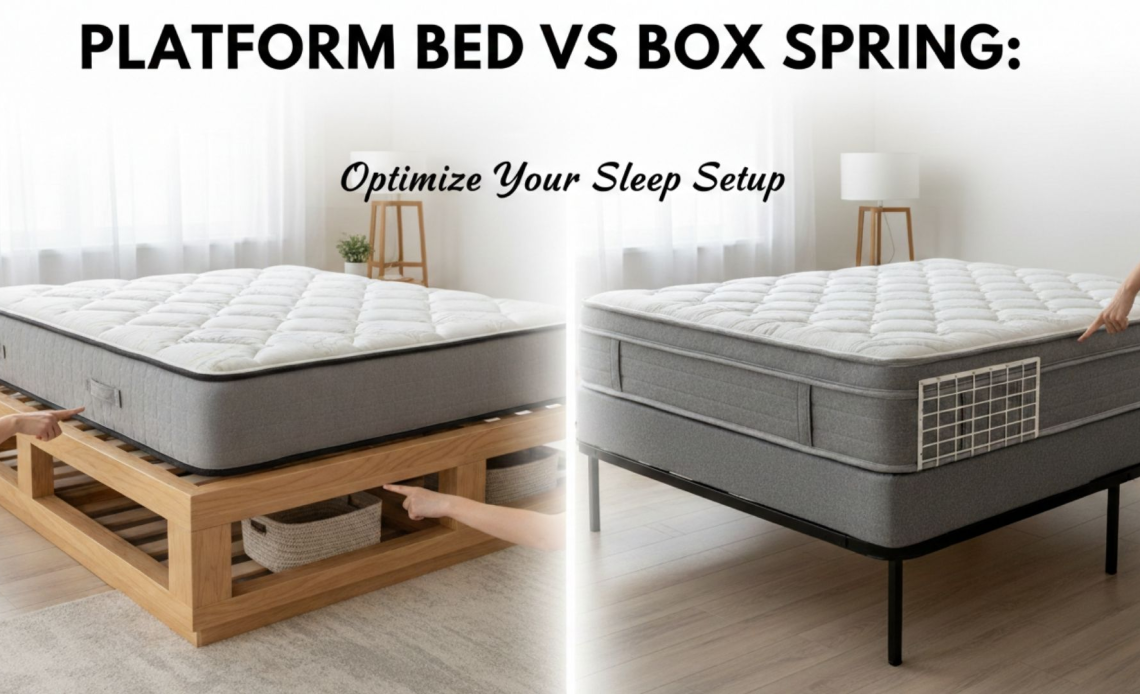
Choosing between a platform bed and a box spring is not just a style decision. The base you sleep on affects how your mattress feels, how long it lasts, and even how easily you get in and out of bed.
If you have ever wondered whether you still need a box spring or if a platform bed is a smarter modern upgrade, this guide will walk you through the real differences in practical, everyday terms.
What Is a Platform Bed?
A platform bed is a bed frame with a built-in surface that supports the mattress directly. Instead of springs, it uses either solid panels or slats made of wood or metal to hold the mattress.
Platform beds sit lower than a traditional frame and box spring combination, which gives them a clean, modern profile.
Many models offer storage drawers or open space underneath, which makes them popular in smaller bedrooms or apartments where every square foot matters.
Because the foundation is already integrated, you put the mattress straight on the platform. There is no extra foundation to buy, and no separate piece to move, squeak, or sag.
Advantages of a Platform Bed
The biggest advantage is compatibility. Most modern mattresses are designed to work well on a solid or slatted base, including memory foam, latex, hybrid, and many pocket coil designs. A platform bed usually provides the kind of even, consistent support these materials need.
Platform beds also tend to feel a bit firmer because the base does not flex as much as a spring unit. If you like a stable surface that holds your body in neutral alignment, this is often a plus. A firm base under a quality mattress can also help delay sagging and extend the usable life of the mattress.
Design is another strong point. From minimalist metal frames to upholstered platforms with plush headboards or built-in lighting, you get a wide range of looks without having to hide a bulky box spring.
Potential Drawbacks
The same low profile that looks sleek can be a challenge for some people. If you have knee, hip, or back issues, you may find a very low bed awkward to get in and out of. You can address this partly with a thicker mattress or bed risers, but it is something to consider.
Support also depends on construction quality. Slats that are too far apart can cause foam or latex mattresses to dip between them over time.
Many mattress warranties specify a maximum gap between slats. If you choose a slatted platform, check the spacing before you buy.
Read More: How To Attach A Headboard To A Bed Frame?
What Is a Box Spring?
A box spring is a separate foundation that sits between your mattress and your bed frame. Traditionally, it is a wood frame with metal coils or springs inside, covered in fabric.
Its original purpose was to act as a shock absorber for innerspring mattresses that did not have much built-in support of their own.
In a classic setup, you have a metal or wooden frame, a box spring on top, and then your mattress. The combined height creates a tall, traditional bed that many people grew up with.
Advantages of a Box Spring
A box spring adds height without changing the feel of your mattress very much. If you prefer a higher sleep surface or have mobility issues and find it easier to sit and stand from a taller bed, a box spring can be helpful.
With an old-style innerspring mattress, the springs in the box can work together with the springs in the mattress to create a more buoyant, bouncy feel.
For some sleepers, especially those who like the classic hotel bed sensation, that familiar bounce is part of the appeal.
In some older beds and frames, a box spring is not just optional. The frame may be designed to rely on the box for proper support, especially if there are no slats or a center support bar.
Potential Drawbacks
Box springs are a legacy solution in a world where mattress technology has changed. Many foam and hybrid mattresses are specifically not designed to sit on a springy base.
Using a box spring with these models can lead to uneven support, faster sagging, and sometimes warranty issues if the manufacturer requires a solid or slatted base.
Over time, the springs in a box spring can lose tension. That is when you start to feel dips, hear creaks, and notice more motion transfer when someone else turns over. At that point the box needs to be replaced, even if your mattress still has life left in it.
Box springs also add bulk. They are awkward to move, take up vertical space, and do nothing for storage. In small rooms with low ceilings, a very tall bed can make the space feel cramped.
Comfort and Support
From a comfort perspective, your mattress does most of the work. The base changes how that mattress performs.
A platform bed gives you a more uniform, stable surface. Under a foam or hybrid mattress, this usually translates into better spinal alignment and less roll-together. The mattress materials can do their job without being distorted by springs underneath.
A box spring adds flex. With a traditional innerspring mattress, that extra give can soften a mattress that feels too hard on a rigid base.
For some combination sleepers who shift positions through the night and enjoy a touch of bounce, this can feel more lively and responsive.
If you are dealing with back pain, the right mattress is the main factor. Many people with back issues find that a supportive platform base keeps the mattress more consistent over time, which can be a real advantage.
Read More: What Is A Sleigh Bed? Everything You Should Know
Durability and Maintenance
Longevity comes down to how many moving parts you have.
A quality platform bed with sturdy slats or panels and proper center support can last many years. There is very little inside it that can wear out. As long as the slats remain straight and the hardware stays tight, the base will continue to hold your mattress evenly.
A box spring, by design, contains metal coils or a springy grid. That movement is what provides shock absorption, but it is also what eventually wears out.
Springs fatigue, frames can crack, and the surface becomes uneven. In practical terms, you may replace a box spring more often than you replace a solid platform.
From a maintenance standpoint, platform beds are simple. Tighten the bolts once in a while and check that the slats are not bowing or shifting. With a box spring, you may find yourself troubleshooting squeaks, tilts, or sagging corners sooner.
Space, Style, and Noise
If you live in a small space or like a clean, streamlined look, a platform bed has clear advantages. The open area underneath can be used for storage bins, roll-out drawers, or simply left open to make the room feel airier. Many platform designs integrate storage as part of the frame, which can replace a dresser or bedside table.
Box springs do not add any functional storage. In many setups, dust ruffles or bed skirts are used to hide the box and frame. This creates a softer, traditional look but can also make the bed feel bulkier in the room.
Noise is another point. A solid platform with well fitted slats is usually quiet. A box spring can start silently, then develop squeaks as the springs and joints age. If you are a light sleeper or share the bed, that extra noise can get old fast.
Cost: Upfront Vs Long Term
A basic box spring often looks cheaper than a well made platform bed. The comparison is not that simple.
With a platform bed, you buy one piece that serves as both frame and foundation. With a box spring, you usually need three items: a bed frame, a box, and mattress. Over time, if you replace the box more frequently than the frame, costs can add up.
If your budget is tight, you can find very affordable metal platform frames that provide strong support and leave space for under-bed storage.
On the other end of the spectrum, upholstered or solid wood platforms with integrated storage and design details will sit at a higher price point, similar to a good quality frame plus box spring pair.
The smarter way to look at cost is lifespan. A sturdy platform that keeps your mattress properly supported can delay the need for a new mattress. A flimsy box spring that sags early can shorten the life of an otherwise good bed.
Mattress Compatibility
This is where many people make a costly mistake. Not every mattress is happy on every base.
Most foam, latex, and hybrid mattresses perform best on solid platforms or slatted bases with relatively small gaps between slats.
The goal is even, continuous support. Too much flex under these materials can cause the mattress to bow, which affects comfort and long term durability.
Traditional innerspring mattresses, especially older designs with basic coil systems, were created with box springs in mind.
The box helps absorb impact and spread weight. If you already have a classic innerspring mattress and a frame that expects a box, keeping or replacing the box spring may still make sense.
Modern pocket coil mattresses are something of a hybrid case. Many of them are designed for use on firm platforms or foundations rather than bouncy box springs.
Always check the manufacturer’s guidance here. Some brands clearly state that using a box spring will void the warranty.
If you own or plan to buy a new mattress, decide on the mattress first, then choose the base that best matches its requirements. Not the other way around.
Lifestyle and Sleeper Type: How to Decide
For back and stomach sleepers who need stable support, a platform bed paired with a medium firm mattress often works very well. The base keeps the mattress from sagging under the hips and midsection, which is key for spinal alignment.
Side sleepers tend to focus more on pressure relief at the shoulders and hips. Here, comfort is driven more by the mattress than the base.
Many side sleepers do well with a slightly softer mattress on a platform, which still keeps the overall surface even.
If you have trouble bending your knees, live with joint pain, or simply prefer sitting down on a higher surface, a frame and box spring combination may feel more natural.
You can replicate some of that height with a thicker mattress or a taller platform, but a traditional high bed is still easiest for some people to handle.
For kids, pets, or anyone who tends to tumble out of bed, a lower platform setup can actually be safer. Less distance to fall means less impact and fewer bumps.
If you move often, think about portability. Many platform beds break down into panels or slats that are easier to carry up stairs than a full size box spring.
Read More: How To Mix And Match Bedroom Furniture?
Conclusion
There is no single winner that suits every home. The better choice is the one that fits your mattress, your body, and your space.
A platform bed is usually the better option if you:
- Use a foam, latex, or hybrid mattress
- Want a modern look, storage space, or a lower profile
- Prefer stable, firm support and fewer components to replace
A box spring still has a place if you:
- Sleep on an older or very traditional innerspring mattress
- Own a frame that is designed to work with a box and has no slats
- Need extra bed height and like a classic, bouncy feel
If you are starting from scratch and buying a new mattress, most people today are better served by a solid or slatted platform base with proper center support.
It is simpler, more compatible with current mattress designs, and less likely to cause warranty headaches.
