
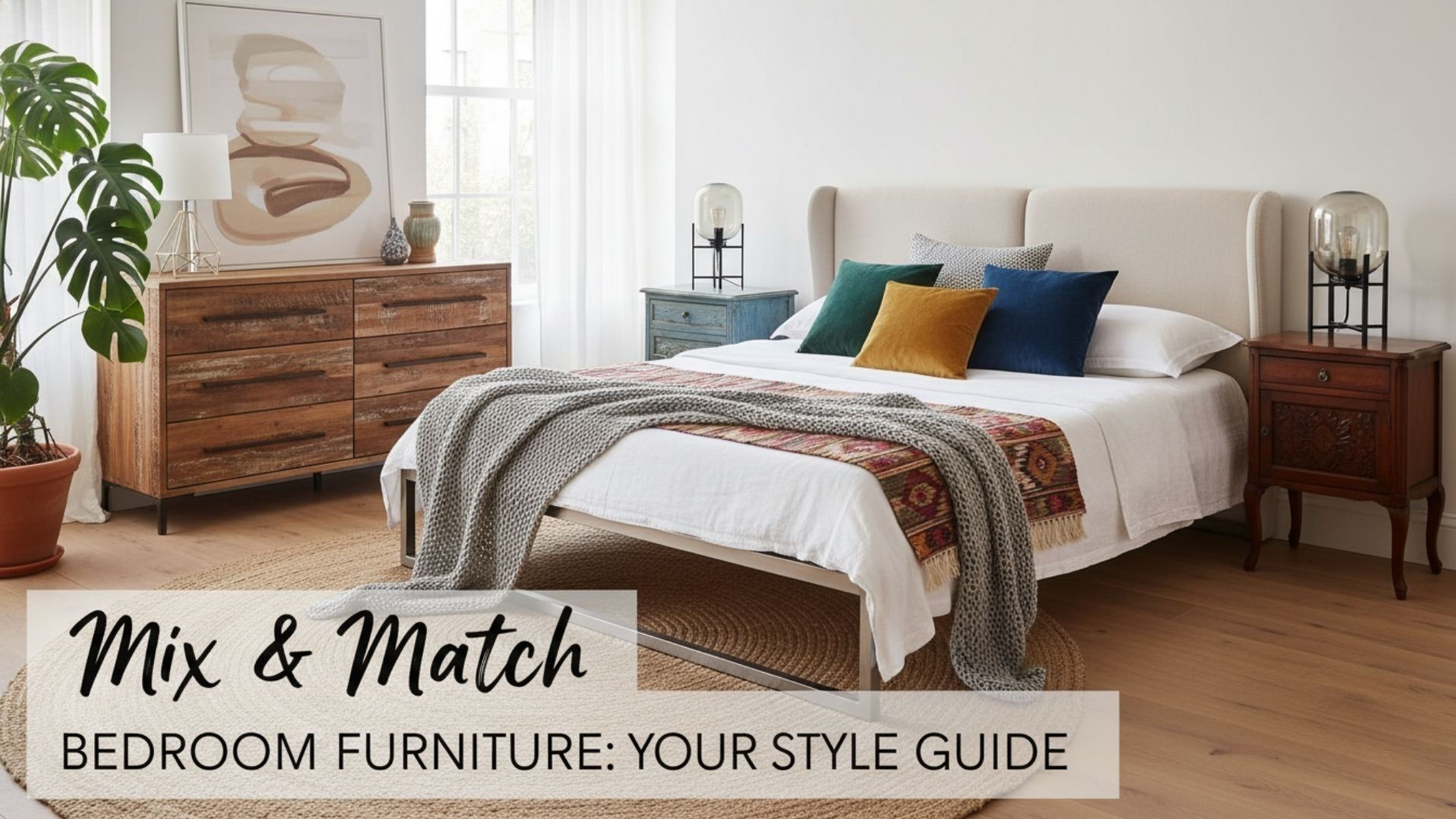
Mixing and matching bedroom furniture sounds simple until you are staring at a bed from one store, nightstands from another, and a dresser you inherited from your parents. Will it look stylish or just messy? The good news is that a pulled together bedroom does not require a matching set.
What you do need is a clear plan and a few design rules that keep all those different pieces speaking the same visual language.
In this guide, we will walk through how to choose pieces that work together, balance color and scale, and use small details to make your bedroom feel cohesive and intentional.
Why Mix And Match Bedroom Furniture?
Matching furniture sets are convenient, yet they can make a bedroom feel flat and predictable. When you mix pieces, the room instantly gains character.
Different finishes, shapes, and styles create depth and make the space feel curated over time rather than bought in one afternoon.
Mixing is also practical. You can start with one quality piece, such as a solid bed frame, and slowly layer in nightstands, dressers, and benches as your budget allows.
It is friendlier to both your wallet and your style, because your taste will evolve and a mix of furniture can adapt more easily.
Start With A Clear Vision
Before you buy or move a single piece, decide how you want the bedroom to feel. Calm and airy, moody and dramatic, cozy and rustic, streamlined and modern. Choose three words that describe the mood and keep them in mind for every decision.
Next, collect a few reference photos. Look for rooms that mix furniture in a way you like. Pay attention to what repeats in those images, such as light wood with black metal, upholstered beds with slim bedside tables, or vintage dressers with modern lamps. Your goal is not to copy a room but to understand the elements that appeal to you.
Choose A Focal Piece First
In most bedrooms, the bed is the star. Start there. Decide on the bed style before anything else, because it sets the tone for the rest of the furniture.
An upholstered headboard suggests softness and can balance harder, more angular nightstands. A wooden sleigh bed feels traditional and pairs well with classic dressers and curved shapes. A metal frame leans modern or industrial and works nicely with warm wood to keep the room from feeling cold.
Once the bed is chosen, everything else should support it. Treat your other pieces as a supporting cast, not competing leads.
Read More: Wardrobe Designs for Small Bedrooms With Sliding Doors
Create A Cohesive Color Palette
Color is one of the easiest ways to mix furniture without visual chaos. You do not need everything in the same finish, but you do need a controlled palette.
Aim for a main base color for large elements like walls and flooring, one or two furniture tones, and an accent color in your textiles and decor.
The popular 60-30-10 approach can be helpful. Roughly sixty percent of the room in your main neutral or base color, thirty percent in a secondary color or wood tone, and ten percent in your accent color. You do not need to measure this exactly, it is simply a guide to avoid overload.
Working With Wood Tones
Most bedrooms have more than one wood tone. The trick is to vary them intentionally. Combine warm woods together, such as oak and walnut, or cool woods together, such as ash and gray stains. If you mix warm and cool, repeat each tone more than once so it feels deliberate.
For example, pair a warm walnut bed with walnut nightstand legs, then bring in a lighter oak dresser. The repetition of walnut keeps the oak from looking random.
Using Paint And Upholstery to Tie Pieces Together
If you already own mismatched furniture, paint can be your best friend. Painting two different nightstands in the same color instantly turns them into a pair.
Reupholstering a bench at the foot of the bed in the same fabric family as your headboard makes them feel related even if the frames are different styles.
Soft furnishings also help. A rug that blends the main colors in the room, pillows that pick up both the bed color and the wood tones, and curtains that echo one of your furniture shades will pull the room together.
Balance Shapes, Heights, and Proportions
Even with a varied mix, the overall silhouette of the room should feel balanced. Look at shapes and heights, not just finishes.
If your bed has a high, solid headboard, consider slimmer, more open nightstands so the wall does not feel too heavy. If your headboard is low and simple, you can bring in chunkier bedside tables or a substantial dresser without overwhelming the space.
Nightstands and the Bed
Nightstands usually look best when their height is close to the top of the mattress. A small difference is fine, but a big gap makes the room feel off and is less comfortable in daily use.
The width matters too. Very tiny nightstands beside a king bed can look toy like, while oversized cabinets can crowd a smaller bed. Aim for nightstands that are proportionate to the bed width and leave some breathing room on each side.
Dressers, Wardrobes, and Chests
Across the room, larger storage pieces should feel in scale with the bed. If you have a tall, imposing wardrobe, balance it with artwork or a mirror over the bed that has a strong presence. If the bed is dramatic, keep the dresser a bit simpler so the eye is not pulled in too many directions.
Try to vary heights around the room so everything is not lined up at the same level. A tall dresser, a medium height bed, and low bench or trunk near the foot of the bed create a pleasing rhythm.
Read More: Saving Space with 10 Multifunctional Furniture Ideas for Stylish Small Living
Blend Styles in a Thoughtful Way
Mixing styles can add interest, yet it works best when one style clearly leads, and the others play backup roles. Decide on a dominant style, such as modern, traditional, rustic, or coastal, then add one contrasting element for tension.
In a mostly modern bedroom you might add one antique dresser or vintage nightstand. In a classic room with panelled walls and traditional bedding, a sleek metal bed frame can lighten the look. The key is moderation. Too many competing styles will feel like a showroom rather than a home.
When in doubt, look for pieces that share at least one element, such as similar leg shapes, related hardware finishes, or comparable levels of visual weight.
Mix Materials and Textures for Depth
A bedroom filled with only one material quickly feels flat. Combine wood, metal, fabric, and natural textures such as wicker, linen, or cane to make the room feel layered.
If your bed is upholstered, add wooden nightstands with metal handles. If the bed is solid wood, bring in metal lamps and a woven bench or basket.
Repeating a material in at least two places keeps the look intentional, for example black metal on the bed frame and again on the drawer pulls of a dresser or on a mirror frame.
Use Repetition To Pull Everything Together
Repetition is the secret that makes a mixed bedroom feel cohesive. Look at your space and choose a few details to repeat. This might be a metal finish, a stain color, a shape, or even a pattern.
If your bed has rounded corners, echo that curve in the mirror above the dresser or in the shape of your lamps. If you choose brass hardware on the dresser, repeat brass on the curtain rod or picture frames. These small echoes teach the eye how to read the room, so the differences feel intentional rather than random.
Common Mistakes To Avoid
Several missteps tend to derail mix and match bedrooms. One is buying everything on the same scale. A large bed with large nightstands and a large dresser can feel heavy and boxy. Intentionally vary proportions so some pieces feel lighter and airier.
Another mistake is ignoring the function. A beautiful nightstand that is too low or too small for your reading habits will frustrate you every day. Always check measurements and think about your nightly routine before committing.
Finally, avoid chasing every trend at once. A curved headboard, boucle bench, fluted nightstands, and statement dresser all in one room will date quickly and feel crowded. Choose one or two details to make a statement and keep the rest quieter.
Simple Mix and Match Formulas You Can Steal
To make all of this more concrete, imagine an upholstered bed in a soft neutral fabric. Pair it with slim, mid century style wooden nightstands and a slightly darker wooden dresser.
Add black metal table lamps and a mirror with a thin black frame. Here, the mix of fabric, wood, and metal feels rich, while the repetition of black frames and wood tones ties everything together.
Or picture a traditional wooden bed with carved details. Instead of matching pieces, use painted nightstands in a muted color and a woven front dresser.
Keep the hardware in a single metal finish and repeat that metal in a floor lamp and curtain rods. The room feels collected and relaxed rather than formal.
You can build endless combinations using the same principles. Start with your focal bed, choose one or two complementary wood tones, repeat a metal finish, vary heights and shapes, and pull it all together with a thoughtful color palette and textiles.
Read More: Transform Your Space with Peaceful Japandi Bedroom Designs for a Calm and Cozy Retreat
Conclusion
Mix and match bedrooms do not happen by accident. They are the result of a few clear design choices carried through consistently.
Decide how you want the room to feel, choose a strong focal bed, control your color palette, and balance proportions around the space. Mix materials and styles, but give the eye anchors through repetition and rhythm.
When you approach your bedroom like a designer, you stop worrying about whether every piece is part of the same set and start asking a better question. Do these pieces tell the story I want this room to tell?
If the answer is yes, you have created a bedroom that feels personal, layered, and inviting, with furniture that works beautifully together even when it does not match.
