
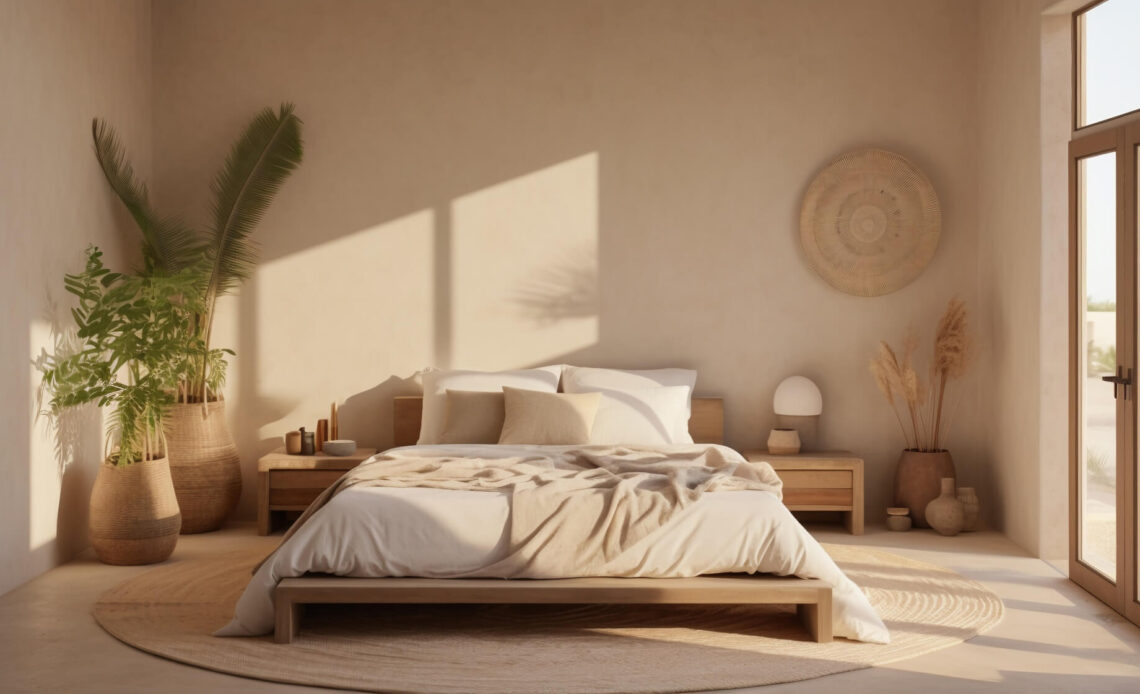
Creating a serene and inviting bedroom is something I’ve always valued, and Japandi design offers the perfect harmony of simplicity and warmth. A blend of Japanese minimalism and Scandinavian coziness, this style transforms any space into a peaceful retreat. It’s all about clean lines, natural materials, and a calming palette that soothes the soul.
I love how Japandi bedrooms focus on functionality without compromising comfort. Every detail feels intentional, from the low-profile furniture to the soft textiles that invite relaxation. It’s more than just a design trend—it’s a lifestyle that encourages mindfulness and balance in our everyday spaces.
Understanding The Japandi Style
The Japandi style blends Japanese and Scandinavian design philosophies. It focuses on creating spaces that feel harmonious and balanced.
What Is Japandi Design?
Japandi design combines Japanese wabi-sabi principles with Scandinavian hygge concepts. Wabi-sabi appreciates imperfection and simplicity, while hygge emphasizes coziness and comfort. By merging these two, Japandi creates a minimalist yet warm aesthetic.
In a Japandi bedroom, natural materials, neutral tones, and functional layouts come together. The result is an uncluttered space tailored for tranquility and purpose.
Key Elements Of Japandi Aesthetics
- Muted Color Palette: Soft neutrals such as beige, taupe, and off-white dominate. Accent tones like forest green or charcoal add depth.
- Low-profile Furniture: Beds, chairs, and tables with clean lines and low heights contribute to simplicity and openness.
- Natural Materials: Wood, bamboo, and cotton textiles are common. These enhance the organic feel of the space.
- Intentional Decor: Minimal art, ceramics, or plants reinforce focus without overwhelming the room.
- Balanced Lighting: Soft, diffused lighting creates a peaceful ambiance, often achieved with paper lamps or pendant lights.
These elements together foster the understated elegance that defines Japandi interiors.
Materials And Tools For Japandi Bedroom Design
Carefully chosen materials and tools create the calming and cohesive essence of a Japandi bedroom. I prioritize natural, sustainable options to achieve the aesthetic and functionality this design demands.
Recommended Materials
- Wood: Choose light or warm-toned wood like oak, ash, or bamboo for furniture and flooring. These add warmth while maintaining a natural look.
- Textiles: Use neutral fabrics like linen, organic cotton, or wool for bedding, curtains, and throws to enhance texture and comfort.
- Ceramics: Incorporate handmade or textured ceramic decor such as vases and bowls to subtly highlight the wabi-sabi principle.
- Paper: Use washi paper for lampshades or decorative screens to integrate Japanese elements.
- Stone: Add small stone accents like trays or a planter to reflect simple elegance.
- Metal: Opt for matte or brushed finishes like black steel or brass on hardware and decorative pieces to ensure subdued accents.
Tools You’ll Need
- Measuring Tape: Ensure precise furniture placement suited to the room’s proportion for balance.
- Level: Confirm straight installation of shelves, frames, and other wall-mounted objects.
- Paint Supplies: Use brushes and rollers designed for smooth finishes when applying neutral or earthy tones to walls.
- Drill: Secure furniture pieces, wall-mounted decor, or light fixtures with ease.
- Sanding Block: Smooth wooden elements for a refined surface, especially for DIY furniture or decor projects.
- Staple Gun: Attach textiles efficiently when upholstering furniture or creating custom soft furnishings.
These materials and tools come together to achieve a balanced Japandi bedroom showcasing intentional design and natural simplicity.
Steps To Create A Peaceful Japandi Bedroom Design
Transforming a bedroom into a peaceful Japandi retreat involves thoughtful choices in color, furnishings, and design elements. Each step contributes to the balanced and tranquil atmosphere synonymous with this style.
Step 1: Choose A Neutral Color Palette
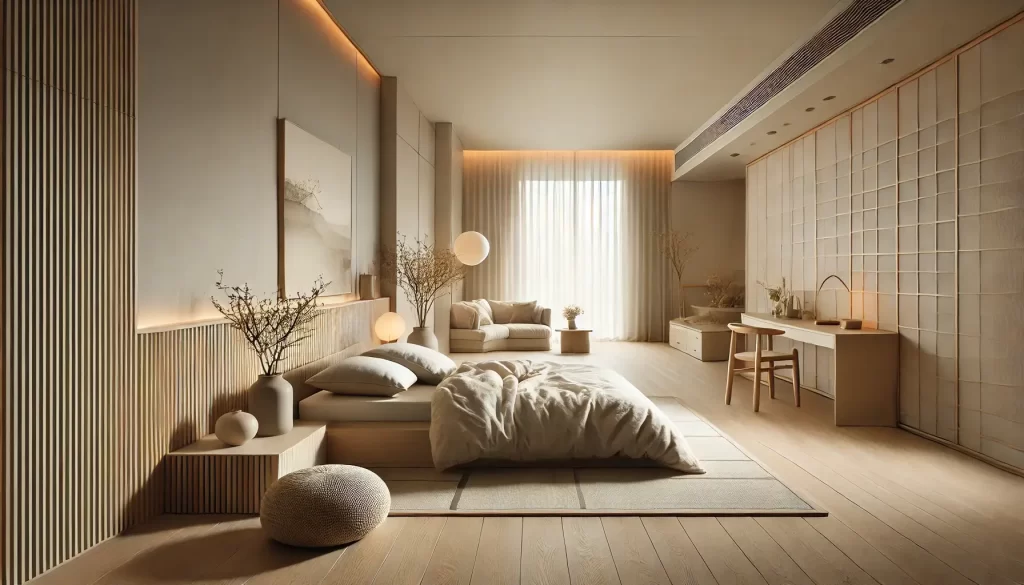
I start by selecting a palette dominated by neutral tones like beige, soft gray, and white, which create a calming base. Earthy accents like muted olive, terracotta, or sand add warmth without overwhelming the minimal aesthetic. Paint walls or add textiles in these shades to maintain cohesion and emphasize simplicity.
Step 2: Select Minimal Furnishings
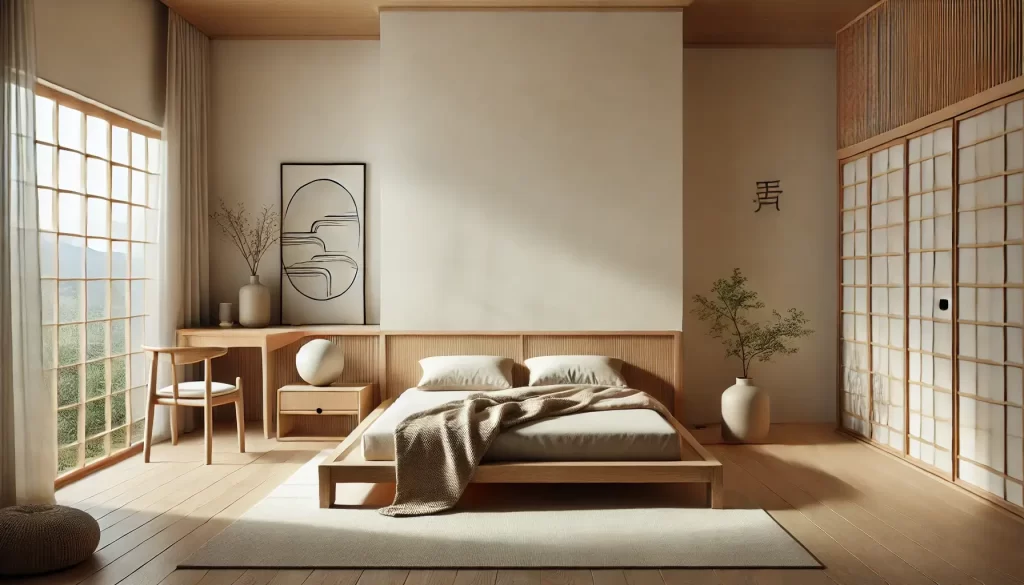
I incorporate low-profile, functional furniture made from natural materials like light oak or ash wood. Pieces such as platform beds, sleek nightstands, or small storage benches align with Japandi’s clean and practical design ethos. Eliminating excessive or bulky furniture ensures an uncluttered and harmonious layout.
Step 3: Add Functional Decor
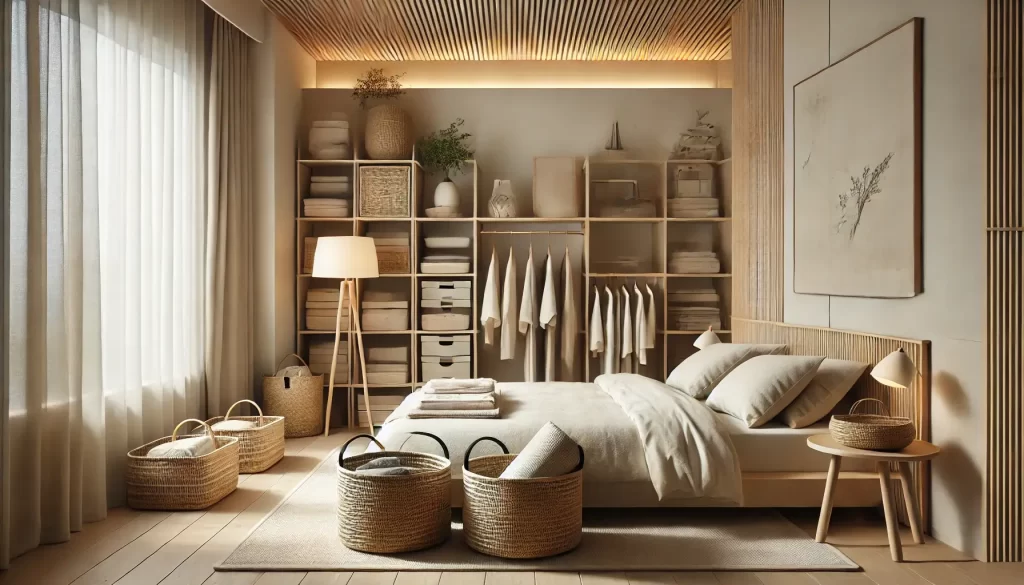
Functional decor enhances both the utility and aesthetic of a Japandi bedroom. Each piece serves a purpose while maintaining the serenity of the space.
Creating A Clutter-Free Space
I focus on organizing decor elements to promote a clutter-free environment. Wall-mounted shelves or peg rails made from light wood provide storage without overwhelming the room. Storage baskets crafted from natural materials, like woven rattan or seagrass, hide smaller items. Multipurpose furniture, such as a bench with hidden storage, ensures necessities are kept out of sight while maintaining the room’s sleek appearance.
Adding Soft Textiles And Rugs
I prioritize soft textures to elevate comfort and warmth within the space. Neutral-toned linen or cotton throws, paired with textured cushions, bring subtle layers of coziness. For rugs, I choose low-pile options in materials like jute or wool, ensuring they align with the muted Japandi color palette. Placing a single area rug under the bed anchors the layout while maintaining visual balance.
Step 4: Introduce Natural Elements
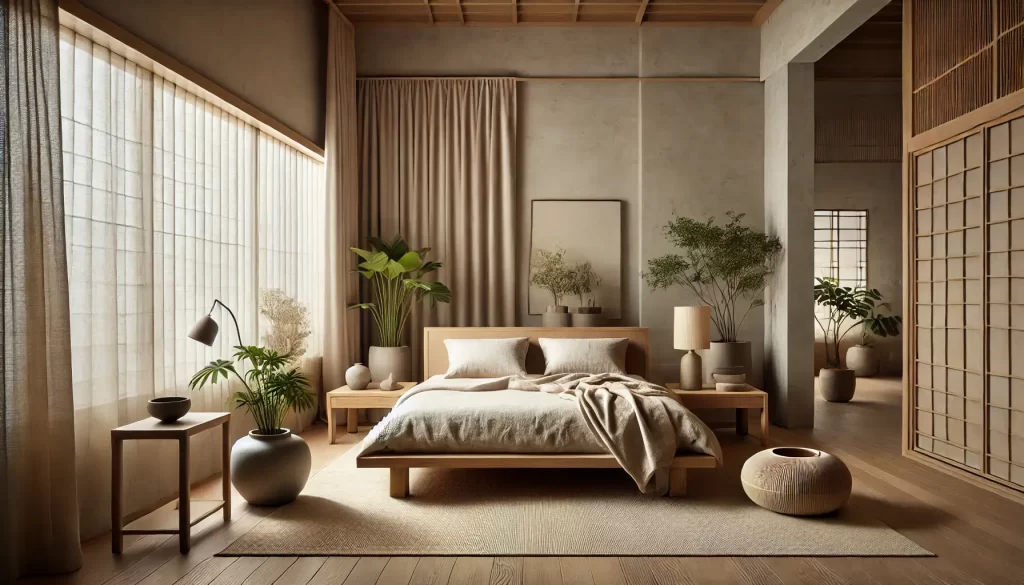
Incorporating natural elements strengthens the connection to the earth and enhances the calming essence of a Japandi bedroom. Thoughtful use of greenery and organic materials amplifies serenity while maintaining a cohesive design.
Indoor Plants For A Zen-Like Feel
Choosing indoor plants with minimalist forms creates a serene, Zen-like atmosphere. I recommend plants like bonsai, snake plants, or peace lilies, which require little maintenance and thrive in indirect light. Position greenery carefully, such as placing a bonsai tree on a nightstand or suspending trailing ivy in natural-fiber macrame hangers. Limit plant selection to 2-3 varieties to avoid a cluttered appearance, ensuring harmony with the Japandi aesthetic.
Enhancing With Bamboo, Wood, And Stone
Integrating materials like bamboo, wood, and stone brings authenticity and tactile warmth to the space. I suggest using bamboo shades for windows, oak or ash wood headboards, and smooth stone trays for holding personal items.
Lightweight bamboo furniture, such as accent stools or benches, complements low-profile furnishings. Incorporating stone details, such as pebble-shaped decor on a shelf, aligns with the principle of simplicity and natural beauty. Select pieces with matte or natural finishes to preserve the authentic look fundamental to Japandi design.
Step 5: Focus On Lighting
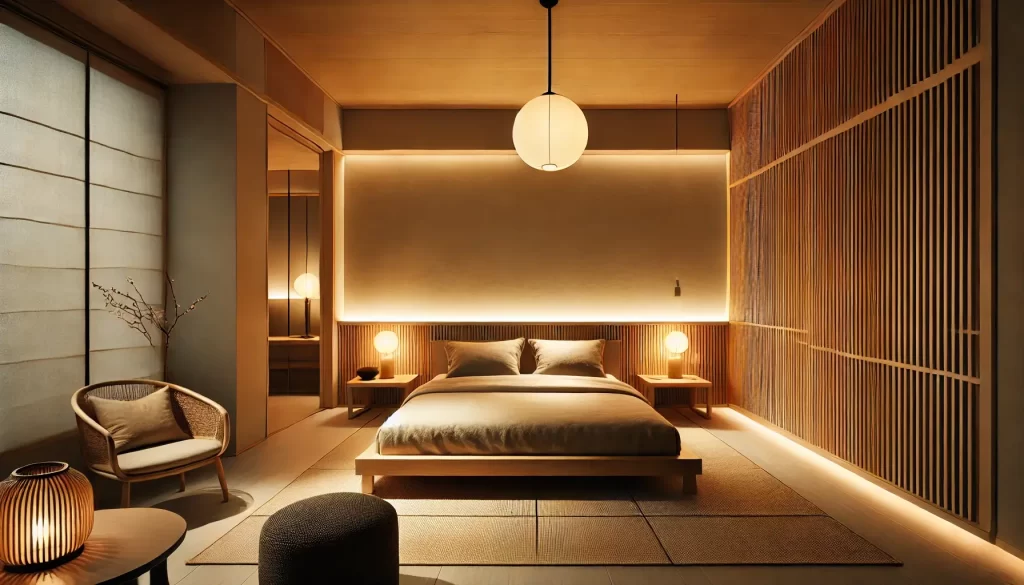
Lighting plays a vital role in creating a peaceful Japandi bedroom. Balanced light, both natural and artificial, enhances the serene and functional atmosphere of this design style.
Using Layered Lighting Techniques
I prioritize layered lighting to achieve depth and flexibility in the bedroom. Combining ambient, task, and accent lighting ensures practicality without overwhelming the space. For ambient light, I select pendant lights or ceiling fixtures with simple designs and natural materials like rattan or linen. Task lighting, such as adjustable wall sconces or lamps with neutral shades, focuses on specific areas like nightstands or reading nooks. Adding soft accent lighting from hidden LED strips behind headboards or under shelves introduces subtle warmth while maintaining a clutter-free appearance. To keep harmony, I prefer warm white bulbs with a color temperature between 2700K and 3000K, complementing the muted tones of the Japandi palette.
Emphasizing Natural Light
Maximizing natural light enhances the calming essence of a Japandi bedroom. I use sheer curtains or gauzy linen drapes in neutral tones to diffuse sunlight gently, allowing for privacy while preserving brightness. Avoiding heavy window treatments keeps the room airy and open. If privacy is essential, I opt for bamboo blinds that align with the natural material theme. Intentionally placing mirrors, such as round or rectangular ones with matte metal frames, helps reflect light further into the space, boosting the room’s brightness and aesthetic harmony.
Tips For Maintaining A Japandi Bedroom
A Japandi bedroom thrives on balance and intentionality. Proper maintenance ensures the space remains serene and functional.
Declutter Regularly
Consistent decluttering supports the minimalist nature of Japandi design. I remove unnecessary items weekly to prevent the buildup of visual or physical clutter. Hidden storage solutions, like baskets or bench compartments, make this process seamless while preserving the clean aesthetic. By limiting belongings to essentials and neatly organizing them, the room feels open and harmonious.
Rotate Decor Items Seasonally
Seasonal updates refresh the room without overcomplicating the design. I swap lightweight linen throws for warmer wool blankets in colder months while maintaining neutral tones. Small decor adjustments, like changing ceramic vases or adding nature-inspired accents, reflect seasonal shifts. This practice keeps the bedroom aligned with Japandi’s simplicity and allows for subtle variation throughout the year.
Keep The Space Calm And Inviting
Maintaining tranquility involves regular attention to sensory elements. I ensure the color palette remains neutral by touching up paint when needed and replacing worn textiles with high-quality natural materials like cotton or linen. To enhance air quality and ambiance, I care for indoor plants and adapt lighting to suit the time of day. These efforts retain the calming and inviting essence central to a Japandi bedroom.
Common Mistakes To Avoid In Japandi Bedroom Design
Identifying and avoiding key design pitfalls helps maintain the seamless harmony of a Japandi bedroom’s aesthetic. Each detail contributes to the tranquil and intentional essence of the style.
Overcrowding The Space
Maintaining an uncluttered atmosphere defines Japandi design, so prioritizing open layouts is crucial. Overcrowding with excessive furniture or decor disrupts flow and serenity. Incorporating only essential pieces, such as a platform bed, a simple nightstand, and multipurpose storage benches, ensures the room remains functional and visually calming. Clutter-free space fosters balance and mindfulness.
Using Bright Or Clashing Colors
Neutral and cohesive tones are fundamental to Japandi aesthetics, as bold or clashing colors can overwhelm the calming intent of the design. Avoid using overly bright shades like vivid reds, oranges, or jewel tones, replacing them with muted hues such as beige, off-white, or soft gray. Small pops of earthy accents, like terracotta or olive, add depth without overpowering the space. Maintaining tonal consistency across walls, furniture, and decor reinforces tranquility.
Ignoring Functionality
Balancing form and utility is essential for creating a purposeful Japandi bedroom. Prioritizing aesthetic appeal over practicality leads to poor usability and imbalance. Choosing furnishings like low-profile beds with storage compartments, peg rails with hooks, and minimalist shelving accommodates organization while maintaining a clean look. Intentional design ensures every element contributes to the room’s serenity and functionality.
Conclusion
Creating a Japandi bedroom is about more than just design—it’s about fostering a space that radiates calm and balance. By blending the simplicity of Japanese minimalism with the warmth of Scandinavian coziness, this style transforms bedrooms into serene retreats.
Every choice, from natural materials to muted tones and thoughtful lighting, contributes to a harmonious atmosphere. With intentionality at its core, Japandi design invites mindfulness and comfort into daily life. A well-crafted Japandi bedroom isn’t just beautiful—it’s a sanctuary for rest and rejuvenation.
Frequently Asked Questions
What is Japandi design, and why is it ideal for a bedroom?
Japandi design combines Japanese minimalism and Scandinavian coziness to create a tranquil space. It emphasizes clean lines, natural materials, and muted colors, making it perfect for bedrooms focused on relaxation and simplicity.
Which materials are essential for a Japandi-inspired bedroom?
Key materials include light or warm-toned wood, neutral-toned textiles like linen or cotton, handmade ceramics, bamboo, stone accents, and matte metal finishes. These natural, sustainable materials align with Japandi’s minimalist aesthetic.
What are the key colors in a Japandi bedroom?
Japandi bedrooms focus on neutral colors like beige, soft gray, and white, with earthy accents. This muted palette enhances the serene and inviting atmosphere central to the design.
How can I incorporate natural elements into a Japandi bedroom?
Use minimalist indoor plants like bonsai or peace lilies, bamboo shades, stone trays, and wooden decor. Limit plant types to maintain harmony and enhance the calming connection to nature.
What type of furniture works best in Japandi design?
Furniture should be minimal, functional, and low-profile. Examples include platform beds, sleek wooden nightstands, and multipurpose furniture like storage benches. Form and function must remain balanced.
How do I create balanced lighting in a Japandi bedroom?
Use layered lighting with ambient lights, task lamps, and soft accent lighting. Maximize natural light with sheer curtains or linen drapes and mirrors to brighten the space while maintaining a minimalist look.
How can I prevent clutter in a Japandi bedroom?
Opt for hidden storage solutions like baskets and multipurpose furniture. Keep decor functional and minimal, using wall-mounted shelves or peg rails to maintain a clutter-free environment.
Are there common mistakes to avoid in Japandi bedroom design?
Avoid overcrowding spaces, using bold or clashing colors, and choosing form over function. Always prioritize a cohesive, balanced layout with neutral tones and functional elements.
