
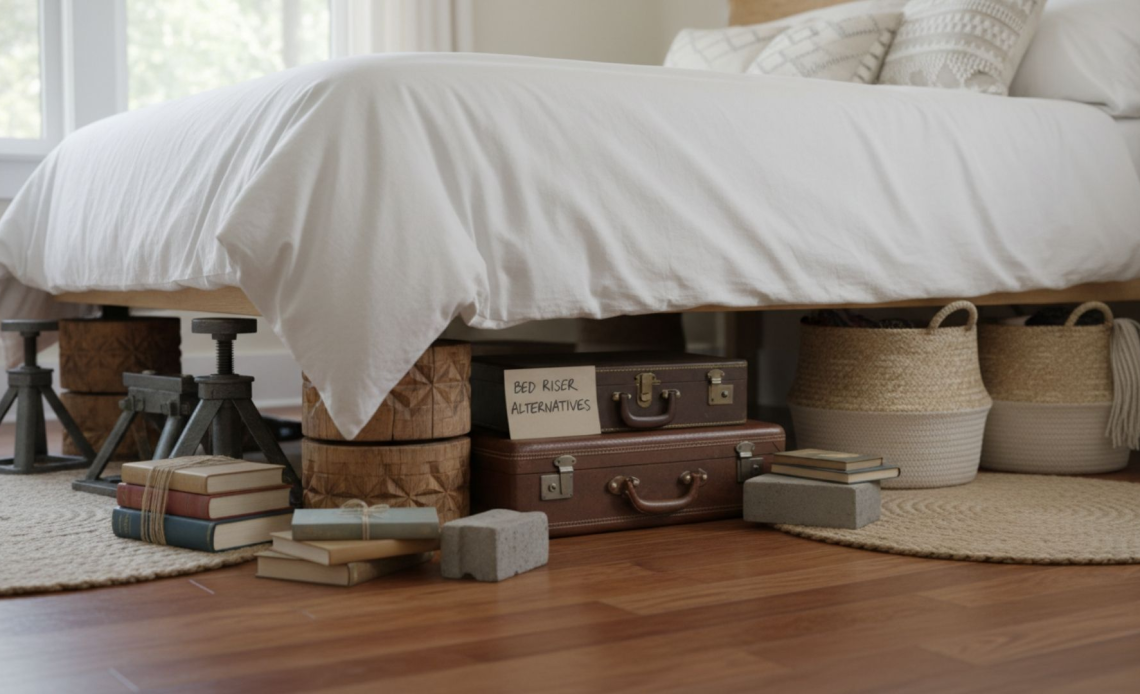
If your bed feels too low, traditional bed risers are not your only option. Maybe they look clunky, do not fit your style, or feel a bit wobbly on hard floors.
The good news is there are several simple, practical ways to add height without compromising safety or aesthetics.
Below are five easy alternatives that can lift your bed, create more storage, or just make getting in and out a little kinder on your knees.
1. Swap to a Taller Bed Frame
One of the cleanest solutions is to replace your current frame with a taller one. Instead of adding separate pieces under the legs, you upgrade the entire foundation.
Modern metal and wood frames come in a range of heights, often from about 7 inches up to 18 inches.
A high profile frame can give you as much height as standard risers, but in a single, sturdy structure that distributes weight more evenly.
Why it works well
- No extra parts to shift or loosen over time
- Less risk of legs slipping off risers
- Visually cleaner, especially in small rooms
If you already like your headboard, look for a frame with universal brackets so you can attach it.
Measure the height of your current mattress top from the floor, then decide how many extra inches you want. Subtract to find your ideal frame height before you shop.
Read More: How To Raise An Air Mattress Off The Floor?
2. Add a Second Foundation or Box Spring
If your frame is fine but the bed feels low, stacking a second foundation is a simple way to gain height.
This is essentially a double decker base: two box springs or foundations under one mattress.
Most standard box springs add about 8 to 9 inches of height. A low profile foundation is usually 4 to 5 inches. By combining one standard and one low profile piece, you can adjust the lift without going overboard.
What to know before you try this
- Check your frame: It must support the extra weight and have a lip or rails to keep the stack from shifting.
- Match sizes: Use two foundations designed for your mattress size so edges line up perfectly.
- Watch ceiling fans: In rooms with low ceilings or hanging fixtures, make sure the higher bed still feels comfortable and safe.
This method keeps weight spread across the whole frame, which is gentler on floors than concentrated pressure on small riser cups.
3. Use Sturdy Wooden Blocks Under the Bed Legs
If you like the basic concept of risers but want more control over size and style, wooden blocks are a solid DIY alternative.
Cut thick blocks from hardwood or quality construction lumber, sand them smooth, and place them beneath the bed legs.
For safety, blocks should be:
- At least as wide as the bed legs, ideally wider
- Cut to identical heights
- Smooth on all sides, with rounded edges to prevent splinters
Drilling shallow recesses in the top of each block gives each bed leg a “pocket” to sit in. This helps prevent sliding.
For slick floors such as tile or laminate, add non slip furniture pads underneath.
Visually, wood blocks can look intentional rather than makeshift, especially if you stain or paint them to match the frame.
Read More: Platform Bed Vs Box Spring: Which is better?
4. Lift the Bed with Storage Platforms or Cubes
If your main goal is more storage, not just height, consider using solid storage cubes or under bed cabinets as a platform.
Instead of narrow risers at each corner, you support sections of the bed with sturdy units that double as organization.
Here are two approaches that work well:
Flat-topped storage cubes
Use heavy duty cube shelves or storage cubes that have a strong, flat top. Arrange them under the side rails or across the width of the frame, then set the bed on top.
The bed frame should rest on the structural parts, not thin back panels.
Low storage cabinets or drawers
Low, deep cabinets or drawer units can also act as a base under the bed. This works especially well for twin or full beds, where the weight is lighter.
Safety and practicality tips
- Weight rating matters: Choose storage units rated for heavy loads or built from solid wood or thick engineered wood.
- Full contact: The areas that touch the bed frame must be flat and fully supported, not just narrow edges.
- Access: Plan how you will open drawers or doors once the mattress is in place.
When done correctly, this can transform a low bed into a built in looking storage system that feels custom.
5. Use a Combination of Thicker Mattress and Mattress Topper
Sometimes you do not need to lift the frame at all. If you only want a modest height increase, upgrading your mattress thickness or adding a topper can give you that extra inch or three without any structural changes.
Common mattress thickness ranges from about 8 to 14 inches, with some luxury models even taller.
Swapping from an 8 inch mattress to a 12 inch one immediately gives you 4 inches of lift. A dense foam or latex topper can add another 2 to 4 inches.
When this is the best option
- You want a softer or more supportive sleep surface anyway
- You are renting and cannot alter the frame or floor
- Your current bed is structurally sound but feels low and too firm
Keep in mind that a significantly thicker mattress can make fitted sheets tighter. Check the “pocket depth” on bedding to ensure a proper fit.
Also, if you have mobility concerns, aim for a final height where you can sit with your feet flat on the floor and knees near a 90 degree angle. That is typically the most comfortable range for getting in and out of bed.
Important Safety Checks for Any Bed Height Change
Whatever method you choose, take a few minutes to confirm everything is safe and stable:
- No wobble: Sit on the edge, roll toward the corner, and gently bounce. The bed should feel solid and quiet.
- Even height: Measure from the floor to the slats or mattress top on all four corners. Uneven heights put stress on the frame.
- Protected floors: Use felt pads or rubber grips under anything that touches wood or tile to prevent scratches and slipping.
- Clearance: Confirm you still have enough space for doors, drawers, and walking paths around the bed.
If anything shifts easily when you push the bed sideways, correct that before you commit to sleeping on it.
Read More: 12 Bed Skirt Alternatives
Conclusion
You do not have to rely on standard bed risers to get a more comfortable, functional bed height.
A taller frame, extra foundation, custom wooden blocks, storage platforms, or a thicker mattress setup can all lift your bed while keeping it stable and attractive.
Start with how many inches you really need and how you use the space around your bed. From there, choose the option that fits your budget, your room, and your style.
A few careful measurements and checks now will give you a bed that feels better and works harder every day.